We’re Here to Help With Your Case (512) 375-3303

Austin Child Sexual Abuse Defense Attorney
Accused of sexually abusing a child, or contacted by a detective or CPS? Call an Austin child sexual abuse defense attorney before you talk to anyone. Your first consultation is free and confidential, and you can reach us after hours. Call (512) 375-3303 or contact us online.
At CMK Defense, PLLC, we defend people accused of child sex offenses in Austin and across Central Texas. An accusation is not proof. These cases often turn on a single recorded interview with a child, and we know how to test that interview, the investigation behind it, and any forensic evidence.

How We Defend Child Sexual Abuse Cases
- Our own investigation: We get the full discovery file, including the recorded forensic interview, CPS records, and medical records. Then we find the witnesses, messages, and records the police never collected.
- The forensic interview: We study how the child was questioned, by whom, and what happened before the interview, including conversations with parents, teachers, or counselors that can shape a child’s account. We work with experts in child interviewing and memory.
- Medical and DNA evidence: We review medical findings and any lab work with independent experts. Many child cases have no physical evidence at all; when the State has some, we test it.
- Trial preparation and honest advice: We prepare every case as if it will go to a jury, and we advise you about your options based on the evidence in your case, not a standard plea offer. That preparation protects you whether the case is tried, dismissed, or resolved another way.

Texas Child Sexual Abuse Laws
Texas law addresses child sexual abuse through several statutes, each carrying severe penalties:
- Sexual Assault of a Child (Texas Penal Code § 22.011(a)(2)): Penetration of a child younger than 17, or contact involving the child’s or another person’s sexual organ, anus, or mouth, as listed in the statute.
- Aggravated Sexual Assault of a Child (§ 22.021): The same acts when the child is younger than 14, or when aggravating factors are alleged, such as serious bodily injury, threats, a deadly weapon, or drugging the child.
- Continuous Sexual Abuse of a Child (§ 21.02): Two or more acts of sexual abuse against a child younger than 14, by a person 17 or older, over a period of 30 days or more. Jurors do not have to agree on which specific acts happened, only that at least two did.
- Continuous Sexual Abuse, Two or More Victims (§ 21.03): A newer, separate offense for offenses committed on or after September 1, 2025: two or more acts of sexual abuse against two or more victims, of any age, over 30 days or more. It is a first-degree felony.
- Indecency with a Child (§ 21.11): Sexual touching or exposure involving a child younger than 17, with intent to arouse or gratify sexual desire.
What Prosecutors Must Prove
The State must prove beyond a reasonable doubt that:
- The alleged conduct occurred
- The child was under the applicable age
- You engaged in the prohibited sexual conduct
- The required mental state existed (which varies by charge)
Many child cases have no physical evidence. The State’s case often rests on the child’s testimony, the recorded forensic interview, and the testimony of the adult the child first told.
Evidence Rules That Make These Cases Different
Child sexual abuse trials follow special rules that do not apply in most criminal cases. Knowing how to use and challenge them is a large part of the defense:
- Forensic interviews: Most children are interviewed on video at a Children’s Advocacy Center. How the questions were asked matters: leading or repeated questions, and earlier conversations with adults, can shape what a child says.
- The outcry witness: Texas lets the first adult the child told about the abuse repeat what the child said in court (Article 38.072), even though that is normally hearsay. The judge must first find the statement reliable. We challenge both the reliability and whether the State picked the right witness.
- Other alleged acts: The State can offer evidence of other alleged sex offenses against children, even ones never charged (Article 38.37). The judge must hold a hearing first, and that hearing is a chance to keep weak accusations out.
- No deadline to file charges: For most child sex offenses there is no statute of limitations (Article 12.01), so accusations can surface years later, when memories have faded and records are gone.
- DNA and lab evidence: When the State has DNA or other lab results, we read the underlying data and work with independent experts. See how we challenge DNA evidence.
Types of Child Sexual Abuse Cases We Defend
Sexual Assault of a Child
We trace how the accusation developed: who the child first told, what questions were asked and by whom, and what was said in between. When both people were teenagers, Texas law provides a defense if the accused was no more than three years older than a child who was 14 or older (§ 22.011(e)(2)); other conditions apply.
Continuous Sexual Abuse of a Child
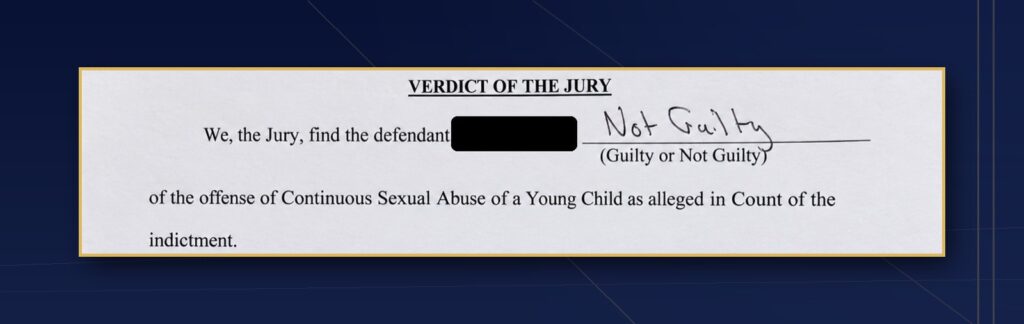
This charge carries a minimum of 25 years in prison with no parole. These cases require especially thorough investigation. Our attorneys have won not-guilty verdicts in continuous sexual abuse cases, including an acquittal on all counts in Hays County.
Aggravated Sexual Assault of a Child
When the child is younger than 14, or prosecutors allege aggravating factors, the charge becomes aggravated sexual assault. These cases demand immediate attention and complete defense preparation.
Indecency with a Child
Allegations may involve touching or exposure. We look at exactly what was described, when, and to whom, and whether ordinary contact was misread.
Penalties and Consequences
All of these charges are felonies, and if you are convicted of more than one count, the judge can order the sentences to be served one after another:
- Continuous Sexual Abuse of a Child: First-degree felony, 25 to 99 years or life in prison, with no parole and no probation.
- Aggravated Sexual Assault of a Child: First-degree felony, 5 to 99 years or life. The minimum rises to 25 years if the child was younger than 10, or younger than 14 and an aggravating factor is proved (§ 22.021(f)). For offenses committed before September 1, 2025, the first age limit is younger than 6, so the date of the alleged offense matters. Deferred adjudication is not available when the 25-year minimum applies.
- Sexual Assault of a Child: Second-degree felony, 2 to 20 years.
- Indecency with a Child: Second-degree felony if by contact (2 to 20 years); third-degree felony if by exposure (2 to 10 years).
Sex Offender Registration
A conviction for sexual assault of a child, aggravated sexual assault of a child, continuous sexual abuse, or indecency by contact requires lifetime registration under Chapter 62 of the Texas Code of Criminal Procedure. Indecency by exposure carries a shorter registration period. Registration means:
- Verifying your registration with local police at least once a year, and every 90 days for some people
- A public listing in the Texas DPS sex offender registry with your name, photo, address, and offense
- Reporting a move or other changes ahead of time
- Statewide limits on some jobs: people whose case involved a child can be barred from driving a bus or taxi, operating amusement rides, or providing unsupervised services in someone’s home (Article 62.063)
- Limits on where you can live and go, through probation or parole conditions (child safety zones) and some city ordinances
- A separate felony charge for failing to register (Article 62.102)
Other Consequences
A conviction, and sometimes the accusation alone, can also lead to:
- A separate CPS investigation, which can result in a finding in the DFPS central registry whether or not you are convicted
- Loss of custody, or termination of parental rights in family court
- Loss of professional licenses and jobs that involve children
- Loss of firearm rights after a felony conviction
- Housing denials and social stigma
Grand Juries in Child Sexual Abuse Cases
Felony charges in Texas go to a grand jury, which decides whether to indict. A “true bill” is an indictment. A “no bill” means the grand jury declined to indict, though the State can present the case again later.
Before indictment, we gather evidence that helps you and consult with forensic interview experts, child psychologists, and medical professionals. When it makes sense, we present the grand jury with the inconsistencies, interviewing problems, or innocent explanations that the police investigation missed.
Common Defenses in Child Sexual Abuse Cases
Depending on the evidence, defenses can include:
- False allegations
- Unreliable or suggestive forensic interviews
- Lack of physical evidence
- Inconsistent statements
- Witness credibility issues
- Improper conduct by investigators
- Innocent explanations
- Alibi and timeline problems
Every defense strategy is built around the facts of your case. For related charges, see our sex crimes and felony charges pages.
Why Choose CMK Defense, PLLC?
Results in Child Sexual Abuse Trials
Our attorneys have won not-guilty verdicts in child sexual abuse trials, including:
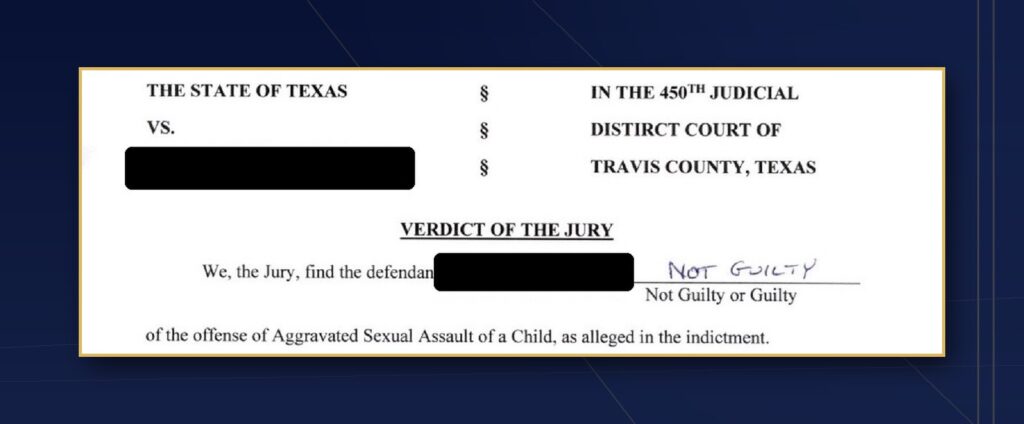
- Aggravated Sexual Assault of a Child, Travis County: Not Guilty
- Continuous Sexual Abuse of a Child, Hays County: Not Guilty on all counts
- Continuous Sexual Abuse of a Young Child: Not Guilty
Every case is different, and past results do not guarantee a similar outcome.
We Teach Other Defense Lawyers
Angelica Cogliano trains Texas defense lawyers on child abuse cases and on cross-examining medical and forensic experts. See her speaking and teaching.
More Than 30 Years of Combined Experience
Our attorneys bring decades of courtroom experience defending serious felony cases across Texas, with trial strategies built for cases that rest on testimony and forensic interviews rather than physical proof.
FAQ: Child Sexual Abuse Charges in Texas
Should I talk to CPS or a detective?
Not before you talk to a lawyer. What you tell a CPS caseworker can be shared with police and used in a criminal case. Be polite, take their contact information, and tell them your lawyer will be in touch.
Can I be charged without physical evidence?
Yes. Many child sexual abuse cases have no physical evidence and rest on the child’s testimony, the recorded forensic interview, and the adult the child first told. That is why the way the child was questioned matters so much.
Is there a deadline for filing child sexual abuse charges in Texas?
For most child sex offenses, no. Texas has no statute of limitations for offenses such as sexual assault of a child, aggravated sexual assault of a child, continuous sexual abuse of a child, and indecency with a child, so an accusation can come years later.
Will I have to register as a sex offender if convicted?
Most child sex offense convictions require lifetime registration. Indecency by exposure carries a shorter registration period. Registration means regular check-ins with police, a public listing, limits on some jobs, and, while on probation or parole, limits on where you can live and go.
What to Expect When You Call
You can call us before any charge is filed. People often reach out when a detective calls, when CPS opens an investigation, or when they learn someone has made an accusation. Calling early gives us a chance to protect you before you make a statement or agree to a search.
Your first consultation is free and confidential, and you can reach us after hours. We will listen to what happened, explain the process and what you may be facing, and tell you what to do (and not do) in the meantime.
If you can, have these ready when you call:
- Any paperwork: arrest or bond papers, a court date notice, a protective order, or a letter from CPS.
- The name and phone number of any detective, investigator, or CPS caseworker who has contacted you.
- The county, and the case or cause number if charges have been filed.
- The names of the people involved and any possible witnesses.
- A list of messages, photos, social media posts, or other records that may matter. Do not delete anything, and do not share it with anyone but your lawyer.
Do not contact the child or the child’s family about the accusation, even to explain. Don’t worry if you don’t have everything on this list. Call anyway.
Contact Our Austin Child Sexual Abuse Defense Attorneys
The sooner you call, the more we can do. Call CMK Defense, PLLC at (512) 375-3303, including after hours, for a free and confidential consultation with an Austin child sexual abuse defense attorney, or reach out through our contact page.
Reviewed by Angelica Cogliano, partner at CMK Defense, PLLC. Last reviewed October 2026.



Tell us what’s going on. We’ll help you figure out what to do next—starting today.

© Copyright 2026 CMK Defense, PLLC. All Rights Reserved.
