We’re Here to Help With Your Case (512) 375-3303

Austin Murder Defense Lawyer
Murder and capital murder are among the most serious charges the State of Texas can bring. A murder conviction can mean up to life in prison, with no probation. A capital murder conviction for an adult means life without parole or death. By the time of an arrest, the State may already have spent weeks or months building its case. What happens in the first days, and what your defense team does with the evidence, can shape everything that follows.
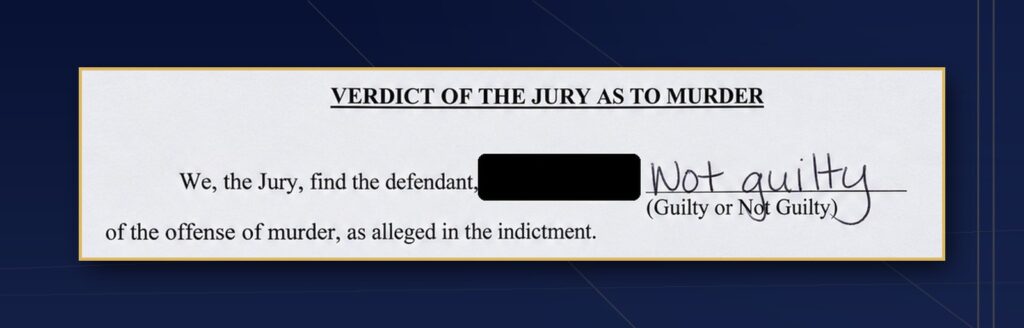
CMK Defense, PLLC represents people charged with murder and capital murder in Austin, Travis County, and across Central Texas. We investigate independently, challenge forensic evidence, and prepare every homicide case as if it is going to trial. Our attorneys have tried murder cases to verdict, and juries have returned not-guilty verdicts for our clients.
What Counts as Murder in Texas?
Texas law recognizes four ways to commit murder. A person commits murder if the person:
- Intentionally or knowingly causes the death of an individual. Tex. Penal Code § 19.02(b)(1).
- Intends to cause serious bodily injury and commits an act clearly dangerous to human life that causes a death. Tex. Penal Code § 19.02(b)(2).
- Commits or attempts to commit a felony (other than manslaughter) and, in the course of it or in immediate flight from it, commits an act clearly dangerous to human life that causes a death. This is often called “felony murder.” Tex. Penal Code § 19.02(b)(3).
- Knowingly manufactures or delivers a Penalty Group 1-B controlled substance (the penalty group that includes fentanyl), and someone dies after using it. Tex. Penal Code § 19.02(b)(4); Tex. Health & Safety Code § 481.1022. It is a defense that the manufacture or delivery was authorized by law. Tex. Penal Code § 19.02(e).
Murder is a first-degree felony. Tex. Penal Code § 19.02(c).
What Makes a Case Capital Murder?
Capital murder is an intentional or knowing murder (under § 19.02(b)(1)) combined with an aggravating circumstance. Tex. Penal Code § 19.03(a). Those circumstances include:
- the victim was a peace officer or firefighter acting in the line of duty, and the accused knew it;
- the murder was committed intentionally in the course of kidnapping, burglary, robbery, aggravated sexual assault, arson, obstruction or retaliation, or certain terroristic threats;
- murder for hire;
- murder during an escape, or certain murders committed while incarcerated;
- more than one person was killed in the same criminal transaction, or in different transactions under the same scheme or course of conduct;
- the victim was younger than 15; or
- the victim was a judge or justice, killed because of the judge’s service or status.
Tex. Penal Code § 19.03(a)(1)–(10). Capital murder is a capital felony. Tex. Penal Code § 19.03(b). If the jury does not find capital murder beyond a reasonable doubt, the defendant may still be convicted of murder or another lesser included offense. Tex. Penal Code § 19.03(c).
Penalties for Murder and Capital Murder in Texas
| Offense | Punishment | Source |
|---|---|---|
| Capital murder, when the State seeks death (18 or older at the time of the offense) | Death or life without parole | Tex. Penal Code § 12.31(a); Tex. Penal Code § 8.07(c) |
| Capital murder, when the State does not seek death | Life without parole if 18 or older at the time of the offense; life (with the possibility of parole) if younger than 18 | Tex. Penal Code § 12.31(a)(1)–(2) |
| Murder | 5 to 99 years or life in prison, and a fine up to $10,000 | Tex. Penal Code §§ 19.02(c), 12.32 |
| Murder with a “sudden passion” finding | 2 to 20 years in prison, and a fine up to $10,000 | Tex. Penal Code §§ 19.02(d), 12.33 |
| Manslaughter (reckless killing) | Second-degree felony: 2 to 20 years | Tex. Penal Code §§ 19.04(b), 12.33 |
| Criminally negligent homicide | State jail felony | Tex. Penal Code § 19.05(b) |
No probation after conviction. A judge cannot place someone convicted of murder or capital murder on community supervision, and a jury cannot recommend it for murder. Tex. Code Crim. Proc. arts. 42A.054(a)(2)–(3), 42A.056(3). Deferred adjudication is also unavailable in most murder cases. A judge may grant it only after finding that the defendant did not cause the death, did not intend to kill anyone, and did not anticipate that a life would be taken. Tex. Code Crim. Proc. art. 42A.102(b)(4).
Parole. A person serving a murder sentence is not eligible for parole until the time actually served, without good-conduct credit, equals half the sentence or 30 years, whichever is less, and never less than two years. Tex. Gov’t Code § 508.145(d)(1)–(2). A person sentenced to life without parole is never eligible. Tex. Gov’t Code § 508.145(a).
Sudden Passion: When Murder Becomes a Second-Degree Felony
At the punishment stage of a murder trial, the defense can raise whether the death was caused “under the immediate influence of sudden passion arising from an adequate cause.” If the defendant proves that by a preponderance of the evidence, the offense becomes a second-degree felony, which lowers the punishment range to 2 to 20 years. Tex. Penal Code § 19.02(d).
The law defines both terms. Sudden passion is passion directly caused by provocation from the person killed (or someone acting with that person), arising at the time of the offense and not solely from earlier provocation. Adequate cause is cause that would commonly produce anger, rage, resentment, or terror in a person of ordinary temper, enough to make the mind incapable of cool reflection. Tex. Penal Code § 19.02(a)(1)–(2).
Common Defenses in Murder Cases
Self-defense and defense of others
Texas law justifies deadly force when a person reasonably believes it is immediately necessary to protect against another’s use or attempted use of unlawful deadly force, or to prevent certain violent crimes such as murder, robbery, aggravated robbery, sexual assault, or aggravated kidnapping. Tex. Penal Code § 9.32(a). That belief is presumed reasonable in some situations, including when the other person was unlawfully and forcibly entering the person’s occupied home, vehicle, or workplace. Tex. Penal Code § 9.32(b).
A person who has a right to be where they are, did not provoke the encounter, and is not engaged in criminal activity has no duty to retreat, and a jury may not consider a failure to retreat in deciding whether the belief was reasonable. Tex. Penal Code § 9.32(c)–(d). The same protections can apply when a person acts to protect someone else. Tex. Penal Code § 9.33. See also our page on self-defense.
Challenging intent
Murder under § 19.02(b)(1) requires that the person acted intentionally or knowingly. If the evidence shows recklessness or negligence instead, the case may support only manslaughter or criminally negligent homicide, which carry far lower punishment ranges. Tex. Penal Code §§ 19.04, 19.05.
Identity and forensic evidence
Many homicide cases turn on forensic evidence: DNA, firearms and toolmark comparisons, autopsy findings, cell phone location data, and digital records. Each of these can be tested, and each has limits. Our forensic work is led by Angelica Cogliano, who chairs two annual forensic science conferences, one statewide and one national, and has successfully excluded the State’s experts in multiple cases, including DNA analysts. When a case calls for it, we bring in independent experts to review the State’s work from the ground up.
Unlawful statements and searches
Statements and evidence obtained in violation of the law can be excluded. Tex. Code Crim. Proc. arts. 38.22, 38.23. If police want to talk to you about a death investigation, read Do I Have to Talk to Police in Texas If I’m Not Under Arrest? before you say anything.
Insanity
It is an affirmative defense that, at the time of the conduct charged, the person, as a result of severe mental disease or defect, did not know the conduct was wrong. Tex. Penal Code § 8.01(a).
What Happens After a Murder Arrest in Travis County
After an arrest, a person must be taken before a magistrate without unnecessary delay and no later than 48 hours. Tex. Code Crim. Proc. art. 15.17(a). In Travis County, that first appearance happens through the Counsel at First Appearance (CAFA) program. Our article on how CAFA affects getting out of jail in Travis County explains magistration and bond.
Bail can be denied in a murder case. Since November 2025, the Texas Constitution allows a judge to hold a person accused of murder or capital murder without bail if the State proves, after a hearing, that bail would not reasonably ensure the person returns to court (by a preponderance of the evidence) or would not reasonably protect the community, law enforcement, and the alleged victim (by clear and convincing evidence). Tex. Const. art. I, § 11d(a)–(b). The accused has the right to a lawyer at that hearing. Tex. Const. art. I, § 11d(f). Bail can also be denied in a capital case when the proof is evident. Tex. Const. art. I, § 11. Having a defense lawyer prepared for that hearing matters.
A felony case proceeds by grand jury indictment. Tex. Const. art. I, § 10. There is no statute of limitations for murder. Tex. Code Crim. Proc. art. 12.01(1)(A).
How CMK Defense, PLLC Handles Murder Cases

- We start investigating early, before evidence disappears and before witnesses’ memories fade.
- We test the State’s forensic evidence instead of accepting it, and we work with independent experts when the case calls for it.
- We prepare every case for trial, because that preparation is what gives a client real options.
- We take fewer cases so we can give each one the attention a homicide case demands.
- We represent Spanish-speaking clients and families, with team members who are native speakers.

Murder is one of the felony charges we defend. See our Felony Charges page for the others.
Murder Charges in Texas: Frequently Asked Questions
Can you get probation for murder in Texas?
Not after a conviction. Neither a judge nor a jury can place someone convicted of murder on community supervision. Tex. Code Crim. Proc. arts. 42A.054(a)(2), 42A.056(3). Deferred adjudication is available only in narrow cases: the judge must find that the defendant did not cause the death, did not intend to kill, and did not anticipate that a life would be taken. Tex. Code Crim. Proc. art. 42A.102(b)(4).
Is there a statute of limitations for murder in Texas?
No. A murder charge can be filed at any time. Tex. Code Crim. Proc. art. 12.01(1)(A).
What is the difference between murder and manslaughter?
The difference is the mental state. Murder generally requires that the person acted intentionally or knowingly (or intended serious bodily injury). Manslaughter applies when a person recklessly causes a death, and it is a second-degree felony. Tex. Penal Code §§ 19.02(b), 19.04.
What is felony murder in Texas?
Felony murder applies when someone commits or attempts a felony, other than manslaughter, and in the course of it commits an act clearly dangerous to human life that causes a death. The State does not have to prove an intent to kill. Tex. Penal Code § 19.02(b)(3).
Can someone be charged with murder for a fentanyl overdose?
Yes. Texas law makes it murder to knowingly manufacture or deliver a Penalty Group 1-B substance, the group that includes fentanyl, if someone dies from using it. Tex. Penal Code § 19.02(b)(4).
When is someone eligible for parole after a murder conviction?
After serving half the sentence or 30 years, whichever is less, and at least two years, without counting good-conduct time. Tex. Gov’t Code § 508.145(d)(2). Eligibility does not guarantee release.
Should I talk to the police if I’m a suspect?
Talk to a lawyer first. Anything you say can be used against you, even if you are trying to clear things up.
Talk With an Austin Murder Defense Lawyer
If you or someone you love is under investigation or has been charged with murder or capital murder, call CMK Defense, PLLC at 512-375-3303 or contact us. The earlier we are involved, the more we can do.
Reviewed by Angelica Cogliano, partner at CMK Defense, PLLC. Last reviewed October 2026.



Tell us what’s going on. We’ll help you figure out what to do next—starting today.

© Copyright 2026 CMK Defense, PLLC. All Rights Reserved.
