We’re Here to Help With Your Case (512) 375-3303

Austin Aggravated Assault Lawyer
Charged with aggravated assault in Austin? These cases usually turn on a few questions: what the object was and how it was used, how serious the injury really was, what the video shows, and who started the confrontation. We get that evidence early and test it. In Texas, aggravated assault is a second-degree felony (2 to 20 years in prison), or a first-degree felony (5 to 99 years or life) in situations the statute lists. Do not give a statement or contact the complainant before you talk to a lawyer. Call an Austin aggravated assault lawyer at CMK Defense, PLLC for a free and confidential consultation.
We defend aggravated assault charges in Travis, Williamson, Hays, and Bastrop counties. We get the video, the medical records, and the witness accounts before they disappear, and we build the case from the full record. See our pages on assault, self-defense, and felony charges for related charges.
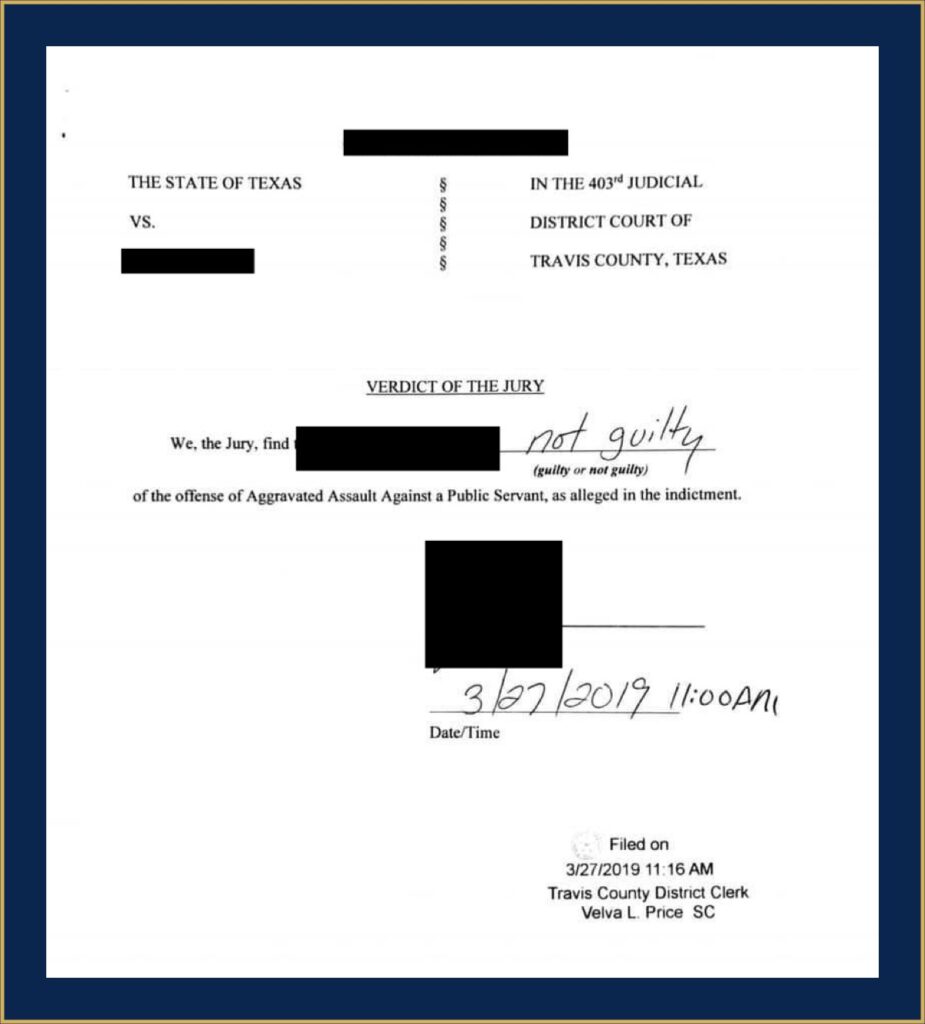
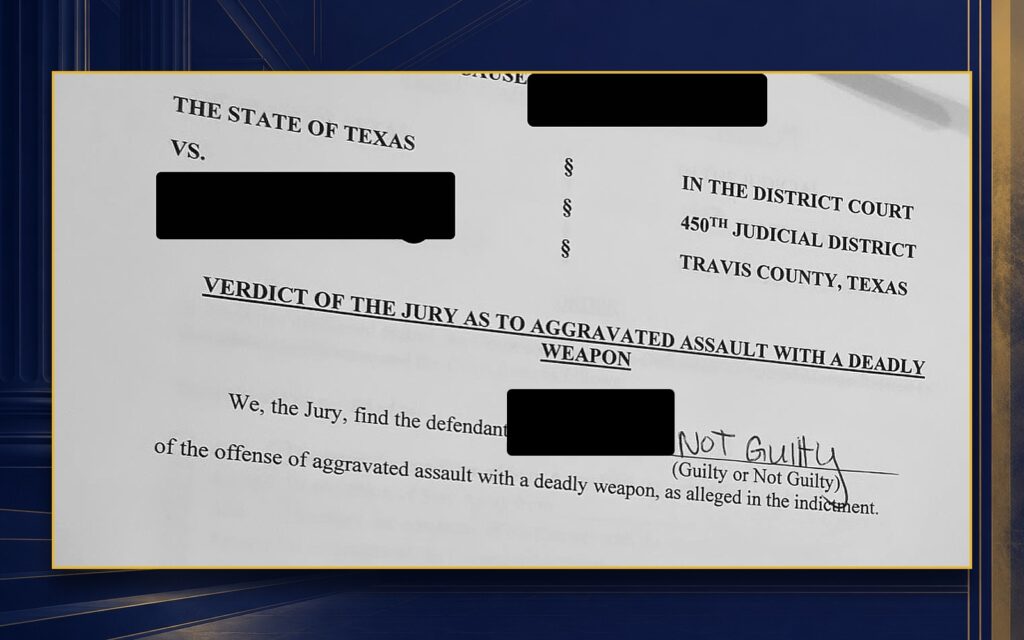
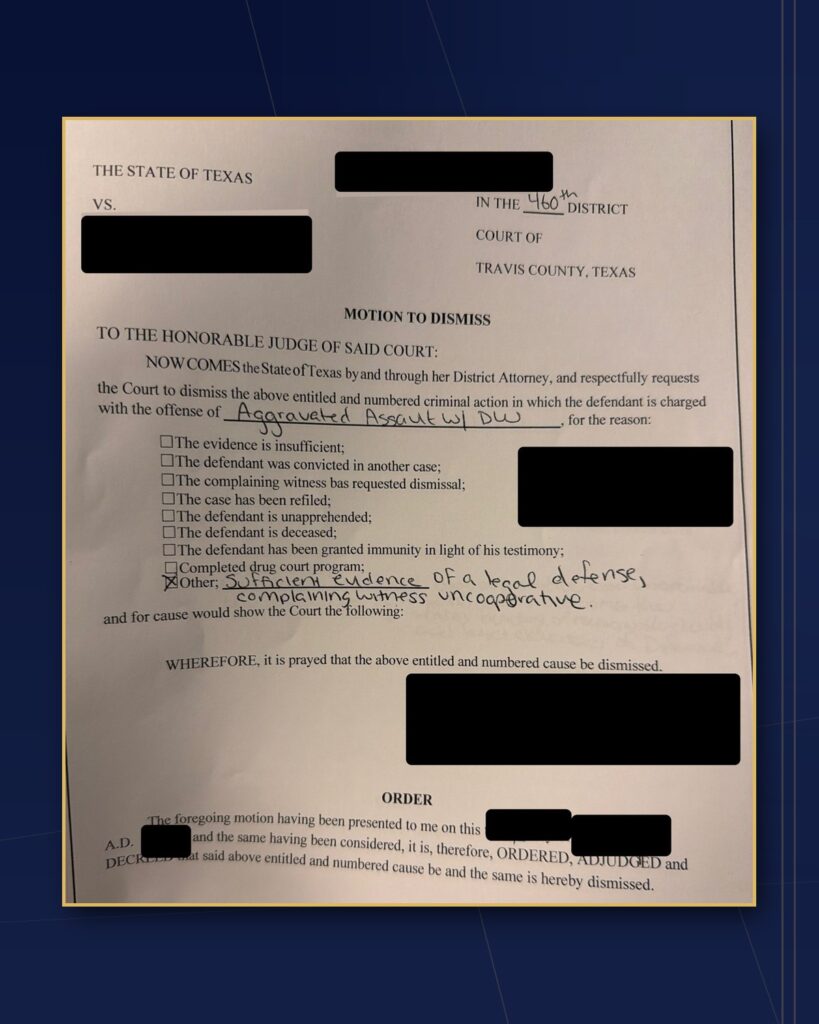
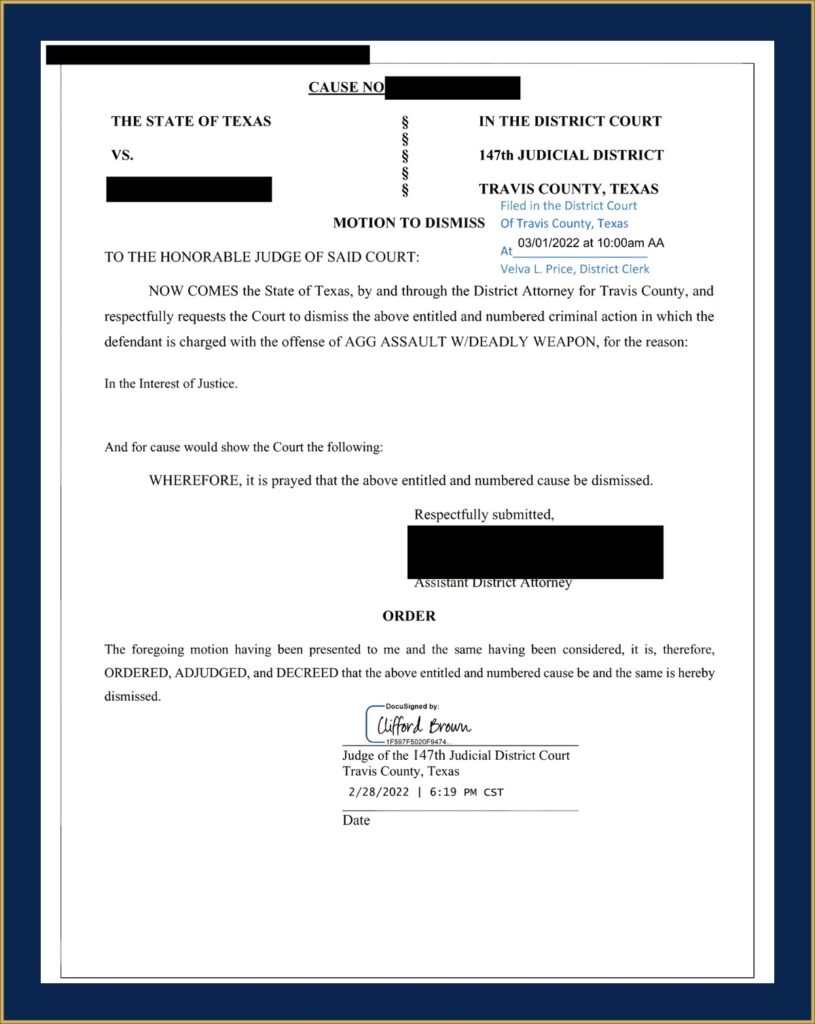
Results: Aggravated assault charges dismissed in Travis County, and not-guilty jury verdicts, including a verdict on aggravated assault against a public servant. See the results. Past results do not guarantee a similar outcome.

What Makes an Assault “Aggravated” in Texas
Aggravated assault starts with an assault under § 22.01: causing bodily injury to someone, or threatening someone with imminent bodily injury. It becomes aggravated when the person also causes serious bodily injury, or uses or exhibits a deadly weapon (§ 22.02(a)).
Serious bodily injury
Serious bodily injury is bodily injury that creates a substantial risk of death or that causes death, serious permanent disfigurement, or protracted loss or impairment of the function of any bodily member or organ (§ 1.07(a)(46)).
Deadly weapon
A deadly weapon is a firearm, or anything manifestly designed, made, or adapted for the purpose of inflicting death or serious bodily injury. It also includes anything that, in the way it is used or meant to be used, can cause death or serious bodily injury (§ 1.07(a)(17)). An ordinary object, such as a car or a bottle, can qualify depending on how it was used. Because the statute covers “exhibiting” a weapon, a person can be charged even when no one was hurt.
When aggravated assault is a first-degree felony
Aggravated assault is a second-degree felony unless § 22.02(b) makes it a first-degree felony. The main situations are:
- The person uses a deadly weapon and causes serious bodily injury to a family member, household member, or dating partner.
- The person uses a deadly weapon and causes a brain or spine injury that results in a persistent vegetative state or irreversible paralysis.
- The victim is a public servant the person knows is lawfully discharging an official duty, or the assault is in retaliation for that duty. The person is presumed to know if the public servant wore a distinctive uniform or badge.
- The assault is committed by a public servant acting under color of office.
- The assault is in retaliation against a witness, a prospective witness, an informant, or a person who reported a crime.
- The victim is a process server or a security officer the person knows is performing a duty.
- The person, in or traveling to or from a motor vehicle, knowingly fires a gun at a home, building, or vehicle, is reckless about whether it is occupied, and hurts someone, damages property, or puts someone in fear of imminent serious bodily injury.
- The assault is part of a mass shooting.
The statute also lists assaults by a person held in a civil commitment facility against certain staff.
How We Defend Aggravated Assault Cases
Every case depends on the evidence. We look at:
- Self-defense and defense of others. Texas law allows force, and deadly force in some situations, to protect yourself or another person (§ 9.31, § 9.32, § 9.33). See our self-defense page.
- The weapon. When the State alleges a deadly weapon, the weapon is the question. A firearm qualifies by definition. For an ordinary object, such as a car or a bottle, whether it was a deadly weapon depends on how it was used (§ 1.07(a)(17)).
- The injury. When the State’s theory is serious bodily injury, it must prove the injury meets the statutory definition. We review the medical records and consult a medical expert when the records call for it. A deadly weapon case can go forward without any injury, so we examine the State’s actual theory.
- The full story. Video, 911 calls, and witness accounts often conflict. We get the complete record, not only the complainant’s version.
- Mental state and lesser charges. The required mental state depends on the allegation. Causing bodily injury can be charged when the act was reckless, but assault by threat requires an intentional or knowing threat (§ 22.01(a)(1)-(2)). A fight that does not meet the aggravated elements may support only a lesser charge.
- Your rights. We look for violations of your constitutional rights, from unlawful searches to statements taken without proper warnings.
Penalties and Consequences of an Aggravated Assault Conviction
A second-degree felony carries 2 to 20 years in prison and a fine up to $10,000 (§ 12.33). A first-degree felony carries 5 to 99 years or life and a fine up to $10,000 (§ 12.32).
Probation and deferred adjudication
If a deadly weapon finding is entered, a judge cannot order community supervision (probation) after a conviction (art. 42A.054). A jury can still recommend it if you have no prior felony and the sentence is 10 years or less (art. 42A.055, art. 42A.056).
A judge may also place a defendant on deferred adjudication (art. 42A.101). Aggravated assault is not one of the offenses excluded by art. 42A.102(b). Whether it is offered depends on the facts, the prosecutor, and the judge.
Parole
A prison sentence with a deadly weapon finding also changes parole. The person is not eligible until the actual time served, without good-conduct credit, equals half the sentence or 30 years, whichever is less, and never before two years (Gov’t Code § 508.145(d)).
Other consequences
A felony conviction also takes away firearm rights (18 U.S.C. § 922(g)(1), Penal Code § 46.04). It can affect work and housing, and for a noncitizen it can affect immigration status. See our page on immigration consequences.
What to Do If You Are Charged
- Do not talk to police or investigators without a lawyer, even to explain.
- Do not contact the complainant. A bond condition or a protective order may forbid it.
- Keep evidence: photos of injuries, texts, video, and the names of witnesses. Do not delete anything.
- Do not post about the case or discuss it with friends.
- Call us before your first court date.
Results in Aggravated Assault Cases
Every case is different, and past results do not guarantee a similar outcome.
- Aggravated Assault Against a Public Servant, Travis County: Not guilty (jury verdict, March 2019)
- Aggravated Assault with a Deadly Weapon, Travis County: Not guilty (jury verdict, September 2023)
- Aggravated Assault with a Deadly Weapon, Travis County: Dismissed (July 2026)
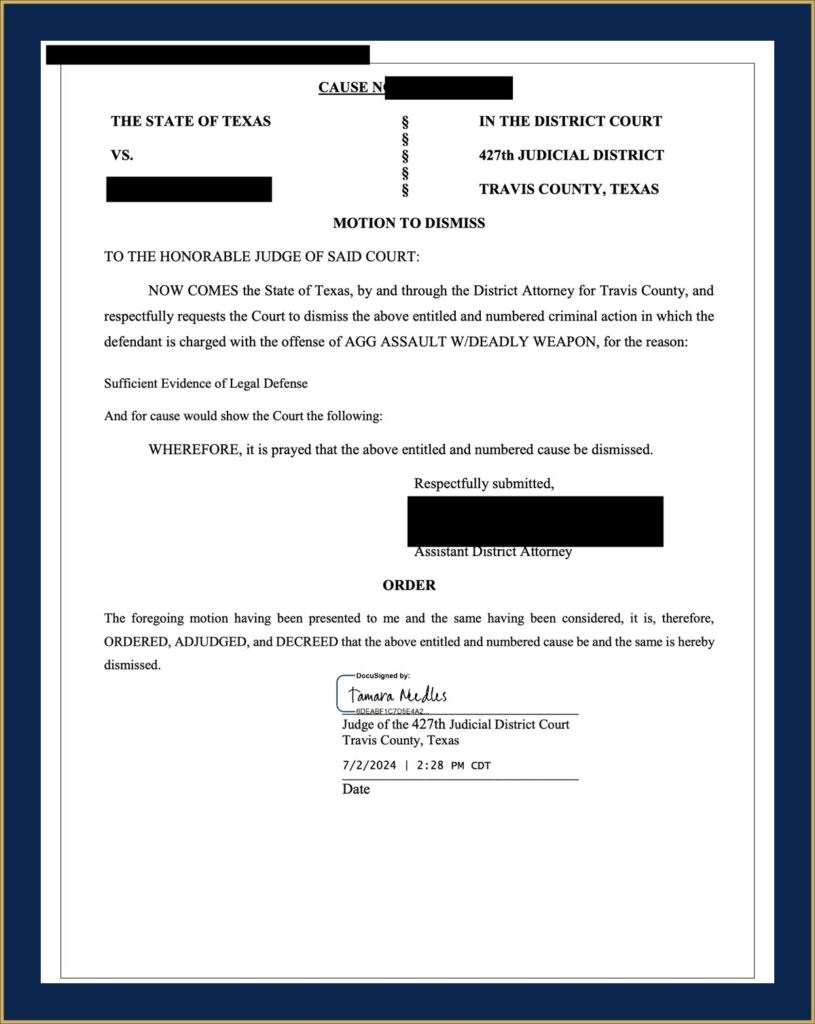
- Aggravated Assault with a Deadly Weapon, Travis County: Dismissed (July 2024)
- Aggravated Assault with a Deadly Weapon, Travis County: Dismissed (February 2022)
Who Handles Your Case
Deniz Kadirhan, partner, has tried numerous felony and misdemeanor jury trials, including aggravated assault and murder cases, and has argued before the Fifth Circuit and the Texas Court of Appeals. She serves on the Board of Directors of the Texas Criminal Defense Lawyers Association. Angelica Cogliano, partner, has tried cases to verdict in eight states and argued before the Texas Third Court of Appeals, the Fifth Circuit, and the Texas Court of Criminal Appeals.
Frequently Asked Questions About Aggravated Assault in Texas
Is aggravated assault a felony in Texas?
Yes. Aggravated assault is a second-degree felony, with 2 to 20 years in prison and a fine up to $10,000 (§ 22.02(b), § 12.33). It is a first-degree felony in situations the statute lists, such as when the victim is a public servant lawfully discharging an official duty. A first-degree felony carries 5 to 99 years or life (§ 12.32).
What is the difference between assault and aggravated assault?
Assault is causing bodily injury or threatening imminent bodily injury (§ 22.01), and it is usually a misdemeanor. Aggravated assault adds serious bodily injury or the use or exhibition of a deadly weapon (§ 22.02(a)), which makes it a felony. See our assault page.
Can I be charged with aggravated assault if no one was hurt?
Yes. Threatening someone with imminent bodily injury is an assault (§ 22.01(a)(2)). It becomes aggravated assault if you use or exhibit a deadly weapon during the threat (§ 22.02(a)(2)). No injury is required.
Can I get probation for aggravated assault?
It depends. If a deadly weapon finding is entered, a judge cannot order community supervision after a conviction (art. 42A.054). A jury can still recommend it if you have no prior felony and the sentence is 10 years or less (art. 42A.055, art. 42A.056). A judge may also offer deferred adjudication (art. 42A.101). Which options exist depends on the facts, the prosecutor, and the court.
How long does the State have to file an aggravated assault charge?
Generally five years from the date of the offense (art. 12.01(4)(I)). Exceptions can apply, so talk to a lawyer about the dates in your case.
Is self-defense a defense to aggravated assault?
Yes. Texas law allows force, and deadly force in some situations, to protect yourself or another person. Once the defense is raised, the State must prove beyond a reasonable doubt that it does not apply (§ 2.03(d)). See our self-defense page.
Can an aggravated assault charge be dismissed or reduced?
Sometimes. A charge can be dismissed, reduced to a lesser offense, or end in a not-guilty verdict. We have obtained dismissals and not-guilty verdicts in aggravated assault cases, and you can see them in our results. Every case depends on its own evidence, and past results do not guarantee a similar outcome.
Talk to an Austin Aggravated Assault Lawyer
An aggravated assault charge moves fast, and what you do in the first days matters. Call CMK Defense, PLLC at (512) 375-3303, including after hours, for a free and confidential consultation, or reach out through our contact page. Do not contact the complainant, and do not talk to investigators until we have spoken.
Reviewed by Angelica Cogliano, partner at CMK Defense, PLLC. Last reviewed October 2026.



Tell us what’s going on. We’ll help you figure out what to do next—starting today.

© Copyright 2026 CMK Defense, PLLC. All Rights Reserved.
