We’re Here to Help With Your Case (512) 375-3303

Austin Intoxication Manslaughter Lawyer
Charged with intoxication manslaughter or intoxication assault in Austin? These cases are built on a crash and a blood or breath result, and each of them can be tested. The State has to prove who was driving, that the person was actually intoxicated, and that the intoxication, not something else about the crash, caused the death or the serious injury. We get the crash investigation, the lab data, and the blood-draw paperwork early and test every link. In Texas, intoxication manslaughter is a second-degree felony (2 to 20 years in prison), and intoxication assault is a third-degree felony (2 to 10 years). Do not give a statement about the crash before you talk to a lawyer. Call an Austin intoxication manslaughter lawyer at CMK Defense, PLLC for a free and confidential consultation.
We defend these charges in Travis, Williamson, Hays, and Bastrop counties. Our attorneys teach other lawyers how to challenge forensic evidence, and we bring that work to every blood and breath case. See our pages on DWI and alcohol offenses, felony charges, and murder for related charges.

What Intoxication Manslaughter and Intoxication Assault Mean in Texas
Both offenses are in Chapter 49 of the Penal Code, the same chapter as DWI, but they are far more serious. Each requires an intoxicated person to cause a harm, “by accident or mistake,” while operating a vehicle.
Intoxication manslaughter
A person commits intoxication manslaughter by operating a motor vehicle in a public place (or an aircraft, watercraft, or amusement ride), being intoxicated, and by reason of that intoxication causing the death of another person by accident or mistake (§ 49.08(a)).
Intoxication assault
Intoxication assault is the same offense when the harm is serious bodily injury instead of death. The person must be operating a vehicle while intoxicated and, by reason of that intoxication, cause serious bodily injury to another (§ 49.07(a)). Serious bodily injury is injury that creates a substantial risk of death or causes serious permanent disfigurement or protracted loss or impairment of the function of any bodily member or organ (§ 49.07(b)).
What “intoxicated” means
“Intoxicated” has two definitions, and the State can use either (§ 49.01(2)):
- not having the normal use of mental or physical faculties because of alcohol, a controlled substance, a drug, a dangerous drug, a combination of those, or any other substance in the body; or
- having an alcohol concentration of 0.08 or more.
That means a case can rest on a lab number, on the officer’s and witnesses’ observations of how the person acted, or on both. It also means a drug case, including a prescription or a controlled substance, can be charged the same way.
What the State has to prove
Every element has to be proved beyond a reasonable doubt: that the person was the one operating the vehicle, that the vehicle was in a public place, that the person was intoxicated, and that the death or serious injury happened by reason of that intoxication. Being intoxicated at the scene of a crash is not enough. The State must connect the intoxication to the result. Under Texas law, a person is responsible for a result only if it would not have occurred but for the person’s conduct, and not if another cause was clearly sufficient to produce it and the person’s conduct clearly insufficient (§ 6.04(a)).
How We Defend Intoxication Manslaughter and Intoxication Assault Cases
Every case depends on its own evidence. In these cases we look at:
- Who was driving. In a serious crash, nobody may have seen who was behind the wheel. The State has to prove it with more than the fact that someone was found near a vehicle.
- Cause. The crash reconstruction, the roadway, the lighting and weather, the other driver’s speed and conduct, and the vehicles’ event data recorders all bear on whether intoxication, as opposed to something else, caused the harm. We work with independent accident reconstruction experts when the facts call for it.
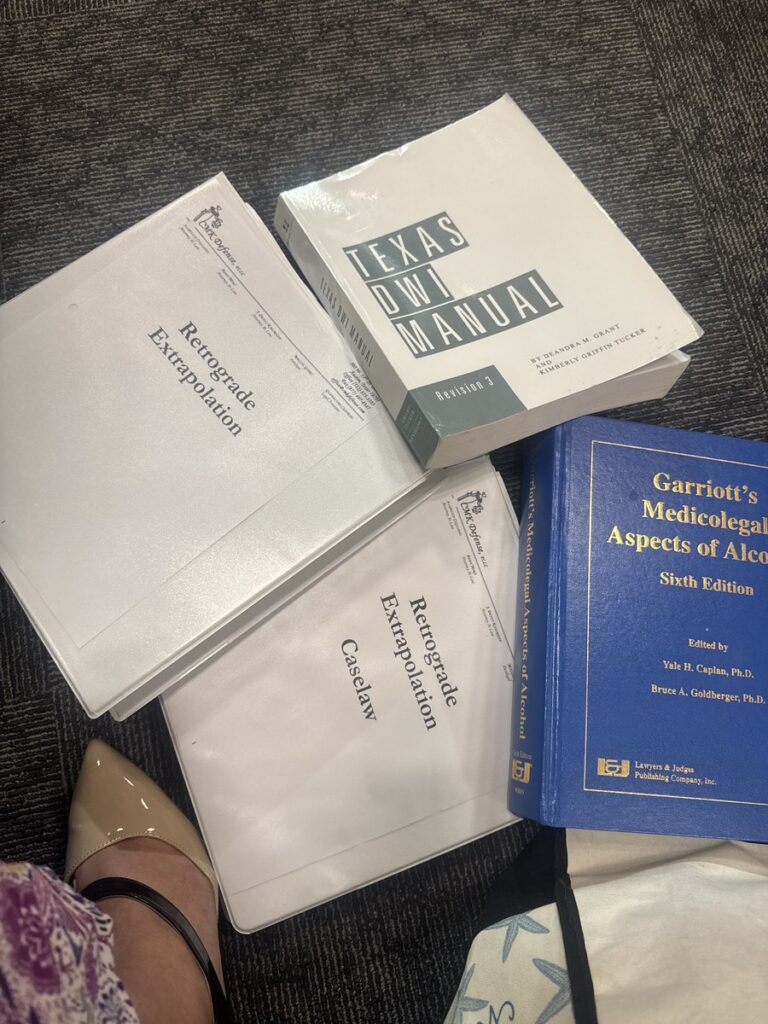
- The blood or breath result. A result is only as good as how the sample was taken, stored, and tested. We review the chain of custody, the tube and preservatives, the lab’s own data and calibration, and the lab’s uncertainty of measurement. When the State has to estimate what the alcohol level was at the time of driving, we challenge the science behind that estimate. See our DWI page for more on how we challenge alcohol evidence.
- How the blood was obtained. Officers generally may not take a specimen without a warrant or probable cause to believe exigent circumstances exist (Transp. Code § 724.012(e)). The Court of Criminal Appeals has held that a nonconsensual blood draw taken under the mandatory-blood-draw and implied-consent provisions of the Transportation Code, without a warrant or another recognized exception, violates the Fourth Amendment. State v. Villarreal, 475 S.W.3d 784, 815 (Tex. Crim. App. 2014). The United States Supreme Court has held that the natural dissipation of alcohol in the blood does not by itself create an exigency in every case. Missouri v. McNeely, 569 U.S. 141, 165 (2013). We examine the warrant affidavit and the timeline in every blood-draw case.
- The signs of intoxication. Injuries, shock, medical conditions, medication, fatigue, and the trauma of a crash can look like intoxication. We compare the officers’ reports with the video and the hospital records.
- Your rights. We look for violations of your constitutional rights, from the stop and the questioning at the scene or the hospital to statements taken without proper warnings, and we use article 39.14 to demand the State’s file.
Penalties and Consequences of a Conviction
Intoxication manslaughter is a second-degree felony: 2 to 20 years in prison and a fine up to $10,000 (§ 49.08(b), § 12.33). Intoxication assault is a third-degree felony: 2 to 10 years and a fine up to $10,000 (§ 49.07(c), § 12.34).
When the range goes up
The punishment goes up in the situations listed in § 49.09:
- Intoxication assault is a second-degree felony if the injured person is a firefighter or emergency medical services worker in the actual discharge of an official duty, or if the injury is a traumatic brain injury that leaves the person in a persistent vegetative state.
- Intoxication assault is a first-degree felony (5 to 99 years or life) if the injured person is a peace officer or judge in the actual discharge of an official duty.
- Intoxication manslaughter is a first-degree felony if the person who died was a peace officer, judge, firefighter, or emergency medical services worker in the actual discharge of an official duty. Amendments that took effect in 2025 add other first-degree situations to § 49.09(b-2), so the exact range depends on the current text of the statute and the date of the offense.
Probation and deferred adjudication
Deferred adjudication is not available for either offense (art. 42A.102(b)(1)(A)). A judge may order probation after a conviction only if the sentence is 10 years or less (art. 42A.053), and not if the judgment contains a deadly weapon finding (art. 42A.054(b)). A vehicle can be treated as a deadly weapon depending on how it was used, so we watch for that request. A jury can recommend probation if you have no prior felony and the sentence is 10 years or less (art. 42A.055, art. 42A.056).
Parole
Without a deadly weapon finding, parole eligibility generally comes when actual time served plus good-conduct credit equals one-fourth of the sentence or 15 years, whichever is less (Gov’t Code § 508.145(f)). With a deadly weapon finding, the person is not eligible until the actual time served, without good-conduct credit, equals half the sentence or 30 years, whichever is less, and never before two years (§ 508.145(d)). Whether a finding is entered can change the time served by years.
Other consequences
A felony conviction also takes away firearm rights (18 U.S.C. § 922(g)(1), Penal Code § 46.04). It also means a driver’s license suspension, and it can affect work, housing, professional licenses, and, for a noncitizen, immigration status. See our page on immigration consequences. A conviction for intoxication assault or intoxication manslaughter can also be used to enhance a later DWI to a felony (§ 49.09(b)).
How long the State has to charge
The general limit for a felony that is not specifically listed in the statute is three years from the date of the offense (art. 12.01(11)). If you are under investigation after a crash, talk to a lawyer about the dates in your case.
What to Do If You Are Charged or Under Investigation
- Do not talk to police or investigators about the crash without a lawyer, including at the scene or the hospital. Be polite, give your name, and say you want a lawyer.
- Do not agree to a search of your phone or vehicle without talking to us. If officers ask for a blood sample, ask whether they have a warrant, and do not argue or resist.
- Do not repair, sell, or scrap the vehicle. Its event data recorder and the damage can matter to the case.
- Keep everything: receipts, texts, photos, and the names of anyone who saw you before the crash. Do not delete anything.
- Do not post about the crash or discuss it with friends. Do not contact the other people involved or their families.
- Call us before your first court date.
Teaching Other Lawyers About Forensic Evidence
Angelica Cogliano teaches criminal defense lawyers across the country how to challenge the State’s forensic evidence and its experts. She has been course director of the Texas Criminal Defense Lawyers Association’s annual Forensics seminar every year since 2022 and program co-chair of the National Association of Criminal Defense Lawyers’ annual forensic science seminar since 2024. See her speaking and teaching page.
- “Junk Science: Learning from It & Preventing It.” 37th Annual Rusty Duncan Advanced Criminal Law Course (TCDLA), San Antonio, June 2024. Course Director and Speaker.
- “Special Teams: Experts & Witnesses.” TCDLA seminars, 2021 and 2022. Speaker.
- “Cajun Crossfire: Attacking the State’s Forensic Case & Handling Experts.” Gumbo Advanced Trial Tactics (TCDLA), New Orleans, February 2025. Speaker.
- “The Fallibility of DNA.” 49th Annual Advanced Criminal Law Course (State Bar of Texas), Houston, July 2023. Speaker and course book author.
Who Handles Your Case
Deniz Kadirhan, partner, has tried numerous felony and misdemeanor jury trials and has argued before the Fifth Circuit and the Texas Court of Appeals. She serves on the Board of Directors of the Texas Criminal Defense Lawyers Association. Angelica Cogliano, partner, has tried cases to verdict in eight states, argued before the Texas Third Court of Appeals, the Fifth Circuit, and the Texas Court of Criminal Appeals, and serves as course director of TCDLA’s annual Forensics seminar.
Frequently Asked Questions About Intoxication Manslaughter and Intoxication Assault in Texas
What is the difference between DWI, intoxication assault, and intoxication manslaughter?
DWI is operating a vehicle while intoxicated and is usually a misdemeanor. Intoxication assault adds serious bodily injury to another person caused by the intoxication, and intoxication manslaughter adds the death of another person. Both are felonies (§ 49.07, § 49.08). See our DWI page.
Is intoxication manslaughter a felony in Texas?
Yes. It is a second-degree felony, with 2 to 20 years in prison and a fine up to $10,000. It is a first-degree felony in the situations listed in § 49.09 (§ 49.08(b), § 49.09).
Can I be charged if the crash was not my fault?
You can be charged, but the State has to prove that the death or injury happened by reason of the intoxication. If the other driver caused the crash, or another cause was clearly sufficient to produce the result, that is a defense issue (§ 6.04(a)).
Does a blood test result prove the case?
No. A result of 0.08 or more meets one definition of “intoxicated,” but the State still has to prove who was driving, that the intoxication caused the death or injury, and that the blood was lawfully taken and properly tested. We challenge each of those points.
Can the police take my blood without my consent?
Not without a warrant or probable cause to believe an exigency exists (Transp. Code § 724.012(e)). In a crash with a death or serious injury, an officer who is refused may seek a warrant for the blood. Do not physically resist, and call a lawyer.
Can I get probation for intoxication manslaughter?
Deferred adjudication is not available. A judge can order probation after a conviction only if the sentence is 10 years or less and no deadly weapon finding is entered. A jury can recommend probation if you have no prior felony and the sentence is 10 years or less (art. 42A.053, art. 42A.054, art. 42A.055, art. 42A.102).
How long does the State have to file the charge?
Generally three years from the date of the offense (art. 12.01(11)). A lawyer can tell you which rule applies to the dates in your case.
Can an intoxication manslaughter or intoxication assault charge be dismissed or reduced?
Sometimes. A charge can be dismissed, reduced to a lesser offense, or end in a not-guilty verdict. Every case depends on its own evidence, and past results do not guarantee a similar outcome.
Talk to an Austin Intoxication Manslaughter Lawyer
A crash investigation moves fast, and what you do in the first days matters. Call CMK Defense, PLLC at (512) 375-3303, including after hours, for a free and confidential consultation, or reach out through our contact page. Do not talk to investigators about the crash until we have spoken.
Reviewed by Angelica Cogliano, partner at CMK Defense, PLLC. Last reviewed October 2026.



Tell us what’s going on. We’ll help you figure out what to do next—starting today.

© Copyright 2026 CMK Defense, PLLC. All Rights Reserved.
