
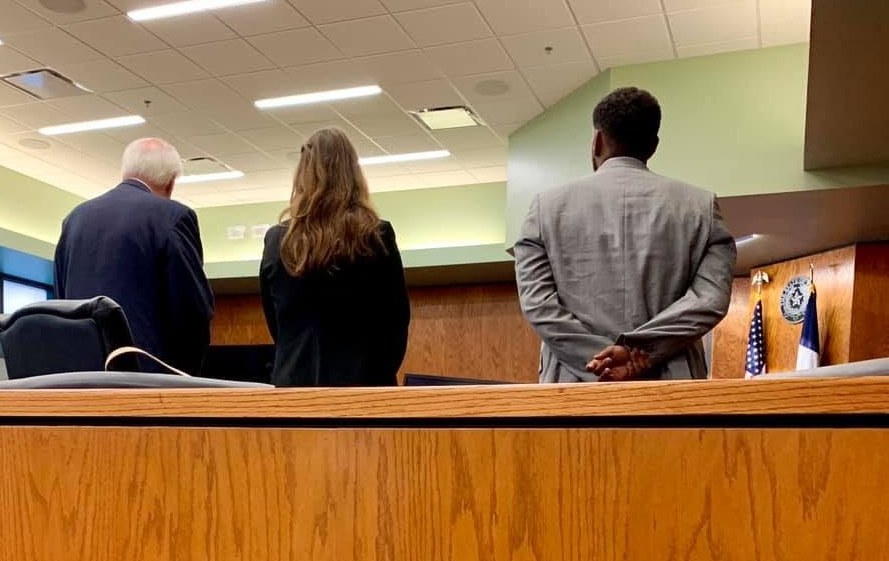
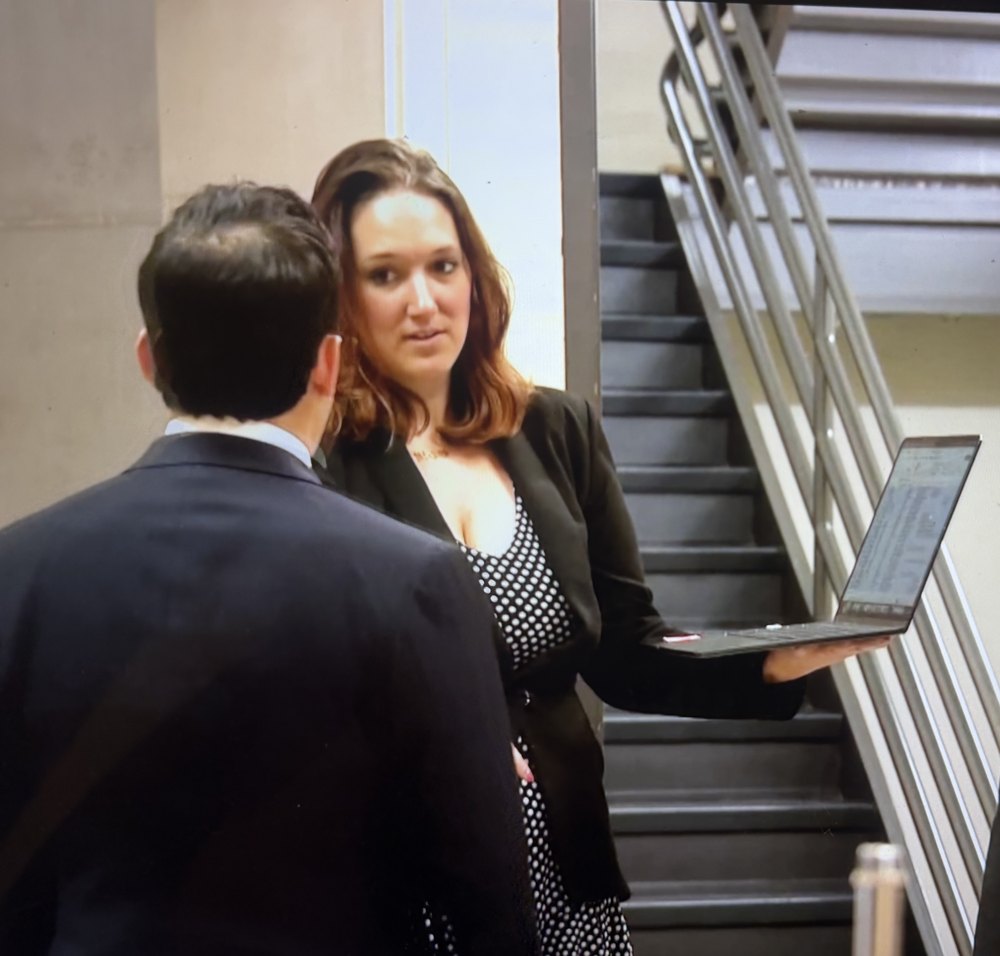
Angelica Cogliano and co-counsel Gerry Morris with our client, waiting for the verdict in a Travis County trial for aggravated assault against a peace officer. The jury found him not guilty on all three counts.
By Deniz Kadirhan, CMK Defense, PLLC | Austin, Texas
Reviewed November 2, 2026
The short answer
Felony punishment ranges in Texas are set by the degree of the offense. The ordinary ranges are 180 days to 2 years in a state jail for a state jail felony, 2 to 10 years in prison for a third degree felony, 2 to 20 years for a second degree felony, and 5 to 99 years or life for a first degree felony. Each can also carry a fine of up to $10,000. A capital felony carries life without parole or death (life, if the person was under 18 at the time of the offense). Tex. Penal Code §§ 12.31–12.35. A qualifying prior conviction can raise the range, and some offenses have their own rules. The range is the limit of what the law allows, not a prediction of the sentence.
Somewhere on the paperwork there is a label: “first degree,” “F2,” “state jail felony,” maybe a paragraph about a prior conviction. Someone has probably already told you what it means, and the number they gave you was probably the highest one.
Here is what the label actually tells you. The degree sets a range with a floor and a ceiling. The ceiling is the upper limit of what the law allows. It is not the sentence. Where a case lands inside that range, or whether it lands in that range at all, depends on things the label does not show: what the State can prove about the charge, what it can prove about any prior conviction it alleges, and whether the law allows a lower punishment for that particular charge.
This guide covers Texas state charges. Federal cases follow different sentencing rules, including the U.S. Sentencing Guidelines; see our page on federal criminal defense.
Felony Punishment Ranges in Texas at a Glance
| Level | Ordinary range | Possible fine | Texas Penal Code |
|---|---|---|---|
| Capital felony | 18 or older at the time of the offense: life without parole, or death if the State seeks the death penalty. Under 18: life. | None listed | § 12.31(a) |
| First degree felony | 5 to 99 years, or life, in prison | Up to $10,000 | § 12.32 |
| Second degree felony | 2 to 20 years in prison | Up to $10,000 | § 12.33 |
| Third degree felony | 2 to 10 years in prison | Up to $10,000 | § 12.34 |
| State jail felony | 180 days to 2 years in a state jail | Up to $10,000 | § 12.35(a)–(b) |
Source: Tex. Penal Code §§ 12.31–12.35. These are the ordinary ranges. A few offenses carry their own minimum, maximum, or fine, and a prior conviction can move the range, as explained below.
For comparison, the most serious misdemeanor, a Class A, carries up to one year in county jail and a fine of up to $4,000. § 12.21.
What Each Felony Degree Carries
What is the punishment for a state jail felony in Texas?
180 days to 2 years in a state jail, plus a possible fine of up to $10,000. § 12.35(a)–(b). It is the lowest felony level, but it is still a felony. A deadly weapon finding or certain prior convictions can push the punishment into the third degree range, and § 12.44 can allow misdemeanor treatment in some cases. Both are covered below.
What is the punishment for a third degree felony in Texas?
2 to 10 years in prison, plus a possible fine of up to $10,000. § 12.34. Court paperwork often shortens it to “F3.” One qualifying prior felony conviction can raise the punishment to the second degree range, 2 to 20 years.
What is the punishment for a second degree felony in Texas?
2 to 20 years in prison, plus a possible fine of up to $10,000. § 12.33. “F2” on the paperwork means second degree felony. It does not mean 20 years. One qualifying prior felony conviction can raise the punishment to the first degree range, 5 to 99 years or life.
What is the punishment for a first degree felony in Texas?
5 to 99 years or life in prison, plus a possible fine of up to $10,000. § 12.32. One qualifying prior felony conviction raises the minimum from 5 years to 15. § 12.42(c)(1). Some first degree offenses have their own sentencing rules, so the label alone may not give the full answer.
What is the punishment for a capital felony in Texas?
There is no range of years. If the State seeks the death penalty, the sentence is life without parole or death. If it does not, the sentence is life without parole for someone who was 18 or older at the time of the offense, and life for someone who was younger than 18. § 12.31(a). For how capital murder differs from murder, see The Four Types of Homicide in Texas.
Where the Degree on Your Paperwork Comes From
The degree comes from the statute the State charged. Each offense in the Penal Code is assigned a degree, and many offenses are assigned different degrees depending on a specific fact, such as the value of the property in a theft or the amount of a drug.
That last point matters. When the degree depends on a fact, that fact is something the State has to allege and prove. It is not automatic.
A related example comes from the punishment statutes themselves. A state jail felony is punished as a third degree felony if the State shows that a deadly weapon was used or exhibited during the offense or the flight afterward, and that the person used or exhibited it, or was a party to the offense and knew a deadly weapon would be used or exhibited. A qualifying prior conviction for certain serious offenses does the same. § 12.35(c). The same conduct carries 180 days to 2 years without that finding, and 2 to 10 years with it. The difference is one allegation, and the defense can contest it.
So when you read the degree on the paperwork, the useful question is not only “What does this degree carry?” It is also “What fact put the charge at this degree, and can the State prove it?”
How a Prior Conviction Can Raise the Range
Texas law lets the State seek a higher punishment range when a person has certain prior felony convictions. The prior is usually alleged in a separate paragraph of the indictment, often called an enhancement paragraph, or in a separate written notice. If you see language about a prior conviction “for the purpose of enhancement,” this is what it is doing.
“Punished as” is not “convicted of”
An enhancement does not change the charge. A third degree felony stays a third degree felony. What changes is the range of punishment that applies to it. That is different from an offense statute that makes the charge itself a higher degree because of a particular fact.
| Charged offense | Range with one qualifying prior | Texas Penal Code |
|---|---|---|
| Third degree felony | Punished as a second degree felony: 2 to 20 years | § 12.42(a) |
| Second degree felony | Punished as a first degree felony: 5 to 99 years, or life | § 12.42(b) |
| First degree felony | 15 to 99 years, or life | § 12.42(c)(1) |
A “qualifying” prior is a final felony conviction. The statute leaves out a state jail felony punishable under the ordinary state jail range, § 12.35(a). That is narrower than saying every state jail felony prior is excluded, so the prior judgment, and the law that applied to it, need to be checked. § 12.42(a)–(c)(1).
In limited cases, a juvenile record counts too. A juvenile felony adjudication for conduct occurring on or after January 1, 1996, that led to commitment to the Texas Juvenile Justice Department (or to a post-adjudication secure correctional facility) is treated as a final felony conviction for these one-prior enhancements. That rule does not apply to the habitual range below. § 12.42(f).
Separate rules apply to certain repeat sex offenses (mandatory life, life without parole, or in one situation a capital felony) and to a person who was civilly committed as a sexually violent predator at the time of the offense. § 12.42(c)(2)–(4), (e). Those cases need their own analysis. Registration is a separate consequence; our guide to sex offender registration in Texas explains which offenses require it and for how long.
The habitual paragraph: 25 to life
If the State alleges and proves two prior felony convictions, the range for most felonies becomes 25 to 99 years or life. § 12.42(d). This is what people mean by “habitual” or “the habitual paragraph.”
The statute puts a condition on it. The second prior conviction has to be for an offense that happened after the first conviction became final:
“. . . the second previous felony conviction is for an offense that occurred subsequent to the first previous conviction having become final . . . .”
Two old convictions are not automatically enough. The order and the dates matter, and they have to line up the way the statute requires. Two convictions entered on the same day, for example, do not by themselves show that sequence. And a habitual allegation is still an allegation: the State has to prove it. Ordinary state jail felonies have their own ladder, below.
State jail felonies have their own ladder
Two sections set the ladder, § 12.35(c) and § 12.425:
- A qualifying deadly weapon finding, or a prior conviction for one of the serious offenses the statute lists: punished as a third degree felony, 2 to 10 years. § 12.35(c).
- Two prior state jail felony convictions in the ordinary state jail range: punished as a third degree felony, 2 to 10 years. § 12.425(a).
- Two prior felony convictions that are not ordinary state jail felonies, in the required sequence: punished as a second degree felony, 2 to 20 years. § 12.425(b).
- A state jail felony that qualifies under § 12.35(c), plus a prior felony conviction that is not an ordinary state jail felony: punished as a second degree felony, 2 to 20 years. § 12.425(c).
What the State Has to Prove Before a Prior Counts
An enhancement paragraph is an allegation, not a conclusion. To use a prior conviction, the State must prove beyond a reasonable doubt that the prior conviction exists and that the person on trial is the person who was convicted. Flowers v. State, 220 S.W.3d 919, 921 (Tex. Crim. App. 2007).
No particular document is required. A certified judgment is the usual route, but the State can also prove a prior through the person’s own admission or stipulation, a witness who was present for the conviction and can identify the person, or records that together establish both points. Id. at 921–22.
The statute adds its own requirements:
- Was the prior conviction final? Section 12.42 speaks of a person who has been “finally convicted.”
- Is it the right kind of prior? An ordinary state jail felony prior does not count under § 12.42.
- Is the sequence right? For the habitual range, the second offense has to have been committed after the first conviction became final.
Each of these gets checked against the actual records: the judgments, the dates, and the identity evidence. Old records are sometimes incomplete or inconsistent, which is one reason to pull them early. If the State cannot prove an enhancement, the range is recalculated without it, using whatever findings and enhancements the State can prove.
Can a State Jail Felony Be Punished as a Misdemeanor?
Yes, in some cases. Texas Penal Code § 12.44 gives two routes, and neither is automatic.
After a conviction: misdemeanor jail time, felony conviction. The judge may impose the confinement allowed for a Class A misdemeanor (up to one year in county jail) instead of a state jail term. The judge considers the gravity and circumstances of the offense and the person’s history, character, and rehabilitative needs, and must find that this punishment “would best serve the ends of justice.” § 12.44(a). The conviction is still a state jail felony.
At the prosecutor’s request: a misdemeanor case. The court may authorize the State to prosecute the state jail felony as a Class A misdemeanor. § 12.44(b). A conviction through this route is a misdemeanor conviction.
“Misdemeanor time” and “a misdemeanor conviction” are not the same thing. If an offer mentions § 12.44, ask which subsection it uses and what the judgment will say. If you are charged with a state jail felony, § 12.44 is one of the first things worth raising with your lawyer.
Higher-degree felonies can come down too, but through the charge itself rather than § 12.44.
Is Probation Possible on a Texas Felony?
Often, but not always. Community supervision, usually called probation, is available for many felonies, from either the judge or the jury. A few limits come straight from the statutes:
- Neither a judge nor a jury can order regular probation if the sentence is more than 10 years. Tex. Code Crim. Proc. art. 42A.053(c)(1); art. 42A.056(1).
- A jury can recommend probation only if the person files a sworn motion before trial saying they have never been convicted of a felony, and the jury finds that true. Art. 42A.055(b).
- Some offenses are excluded, and the lists for judges and juries are different. Arts. 42A.054, 42A.056.
Deferred adjudication, where the judge puts off a finding of guilt, is a separate option with its own eligibility rules. Arts. 42A.101–.102. Being eligible for either one does not mean it will be granted. Our guide to probation in Texas covers the details.
Who Decides Where in the Range the Sentence Falls?
When a case goes to a jury trial on a not-guilty plea, the judge assesses punishment unless the defendant has chosen the jury. There are two ways to choose the jury: a written election made before jury selection begins, or a sworn motion for probation filed before trial in a case where the jury can recommend probation.
“. . . in other cases where the defendant so elects in writing before the commencement of the voir dire examination of the jury panel, the punishment shall be assessed by the same jury . . . .”
After a guilty verdict, the defendant can change that election only with the prosecutor’s consent. Id. Capital cases follow separate procedures. Art. 37.071.
Choosing a judge or a jury is a strategic decision. It depends on the charge, the range, the court, the facts, and whether probation is in play. Discuss the punishment election and any probation application with your lawyer well before trial.
What the Range Does Not Tell You
The punishment range sets the boundaries. Several questions people expect it to answer are separate questions, each with its own rules:
- How much time someone will actually serve. Parole eligibility and release decisions are governed by separate law, including Tex. Gov’t Code § 508.145, and depend on the offense. Credit for time already spent in jail is its own rule. Tex. Code Crim. Proc. art. 42.03, § 2. A sentence of a certain number of years does not set a release date.
- Stacking. Whether multiple sentences run at the same time or back to back is its own question. Tex. Code Crim. Proc. art. 42.08. For offenses from the same criminal episode tried together, see Tex. Penal Code § 3.03.
- The outcome. The range does not tell you what the evidence supports, what the defense can do with it, or where a particular case will land.
Results in Our Felony Cases
The degree on the paperwork sets the range. It does not decide the case. Here are some of our results, grouped by the level of the charge:
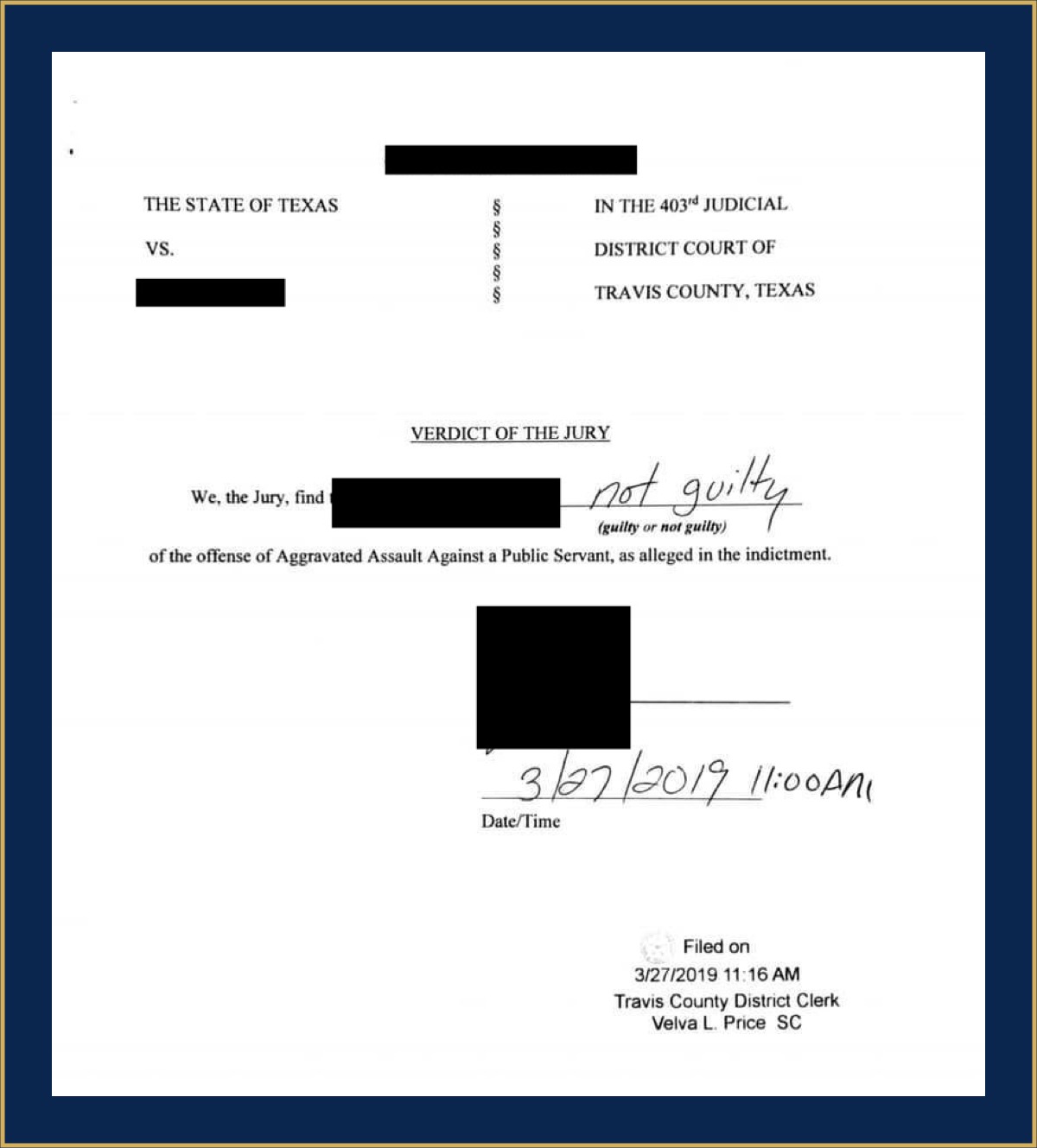
- First degree felony. Aggravated assault against a public servant (a peace officer), Travis County: not guilty on all three counts, jury verdict (March 2019). See our page on aggravated assault.
- First degree felony, 25 to 99 years or life. Continuous sexual abuse of a child, Hays County: not guilty on all counts (July 2026). See our page on child sexual abuse charges.
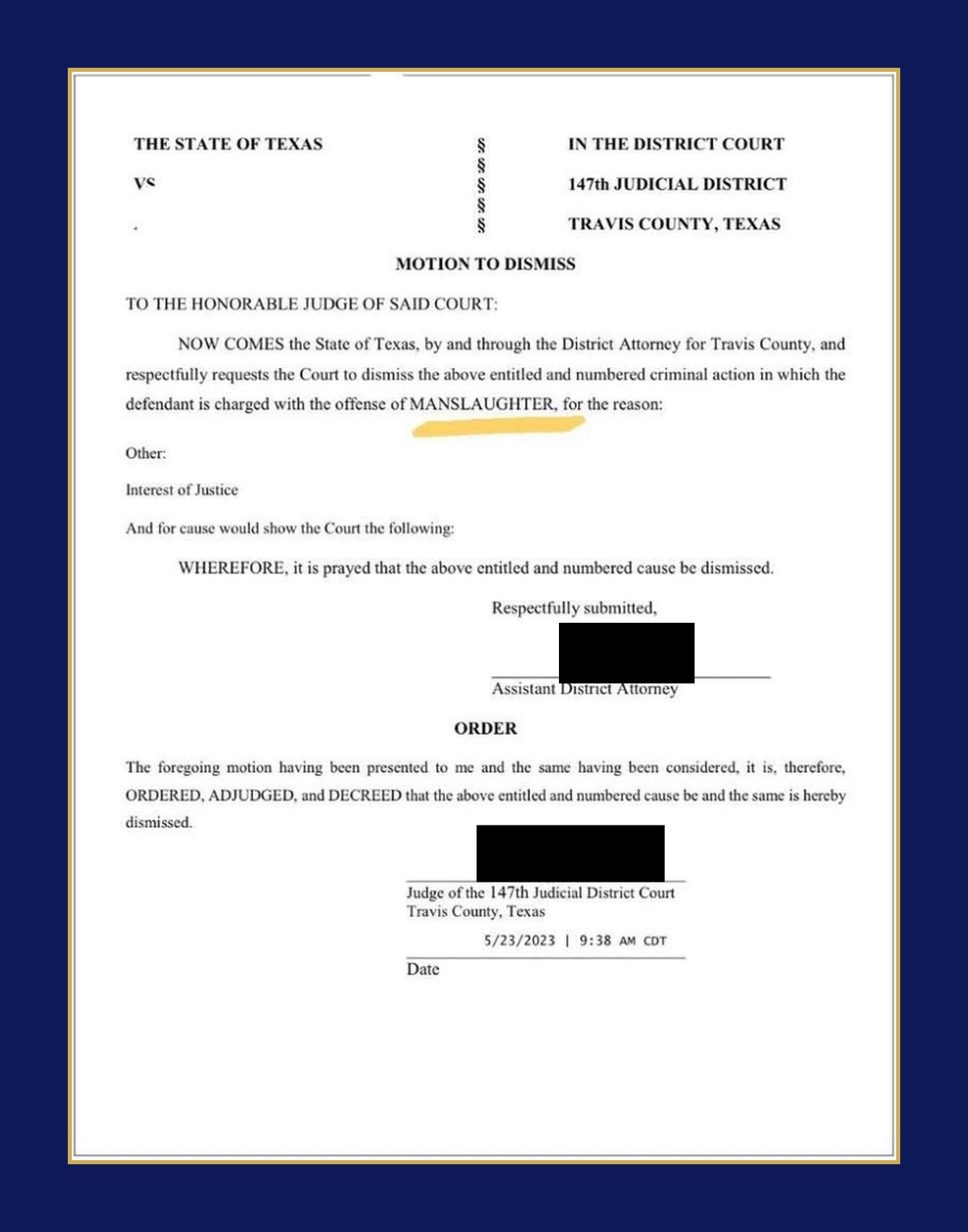
- Second degree felony. Manslaughter, Travis County: dismissed in the interest of justice (May 2023).
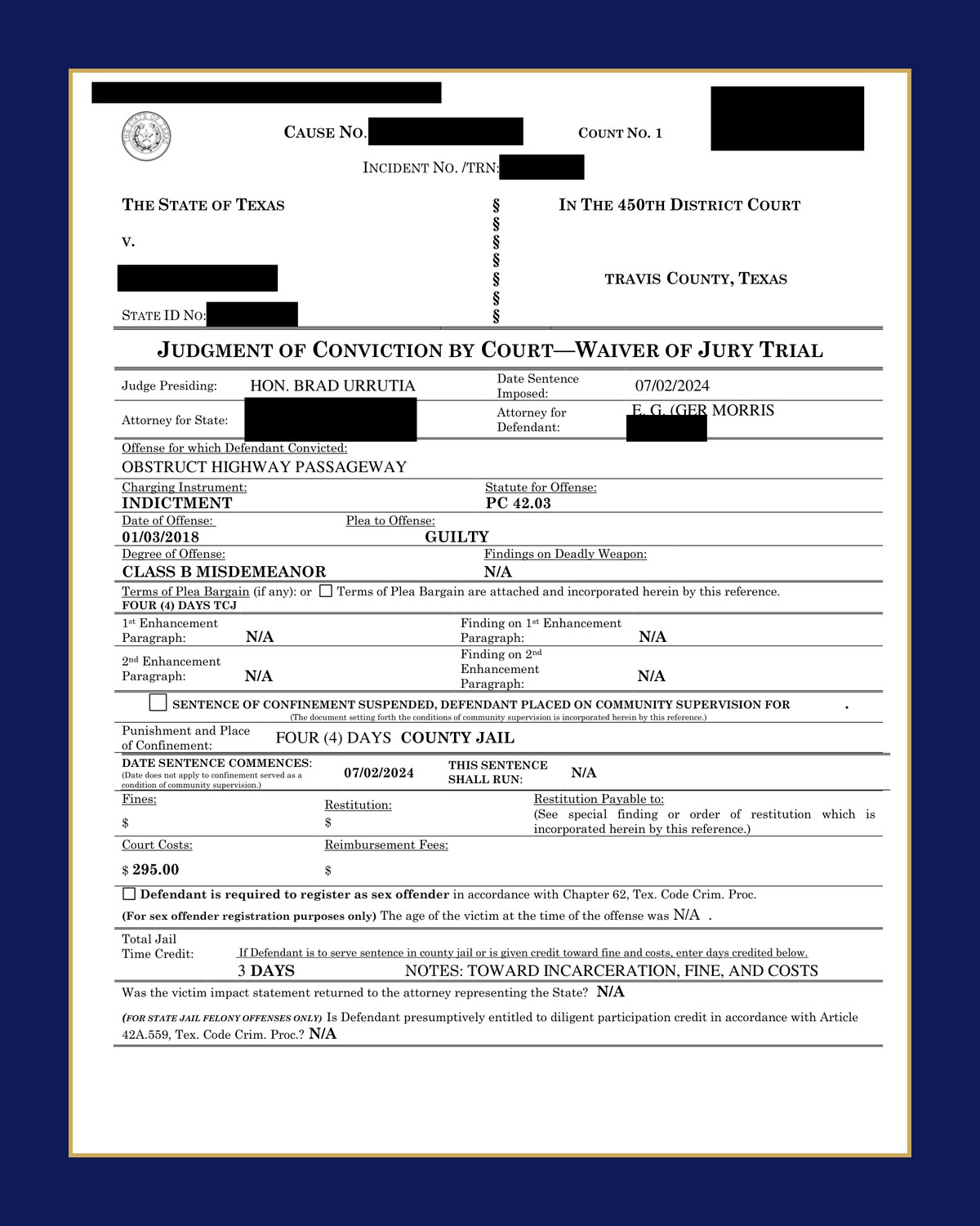
- Third degree felony. Driving while intoxicated with two prior DWI convictions, Travis County: resolved by a plea to a Class B misdemeanor (obstructing a highway), 4 days in county jail (July 2024).
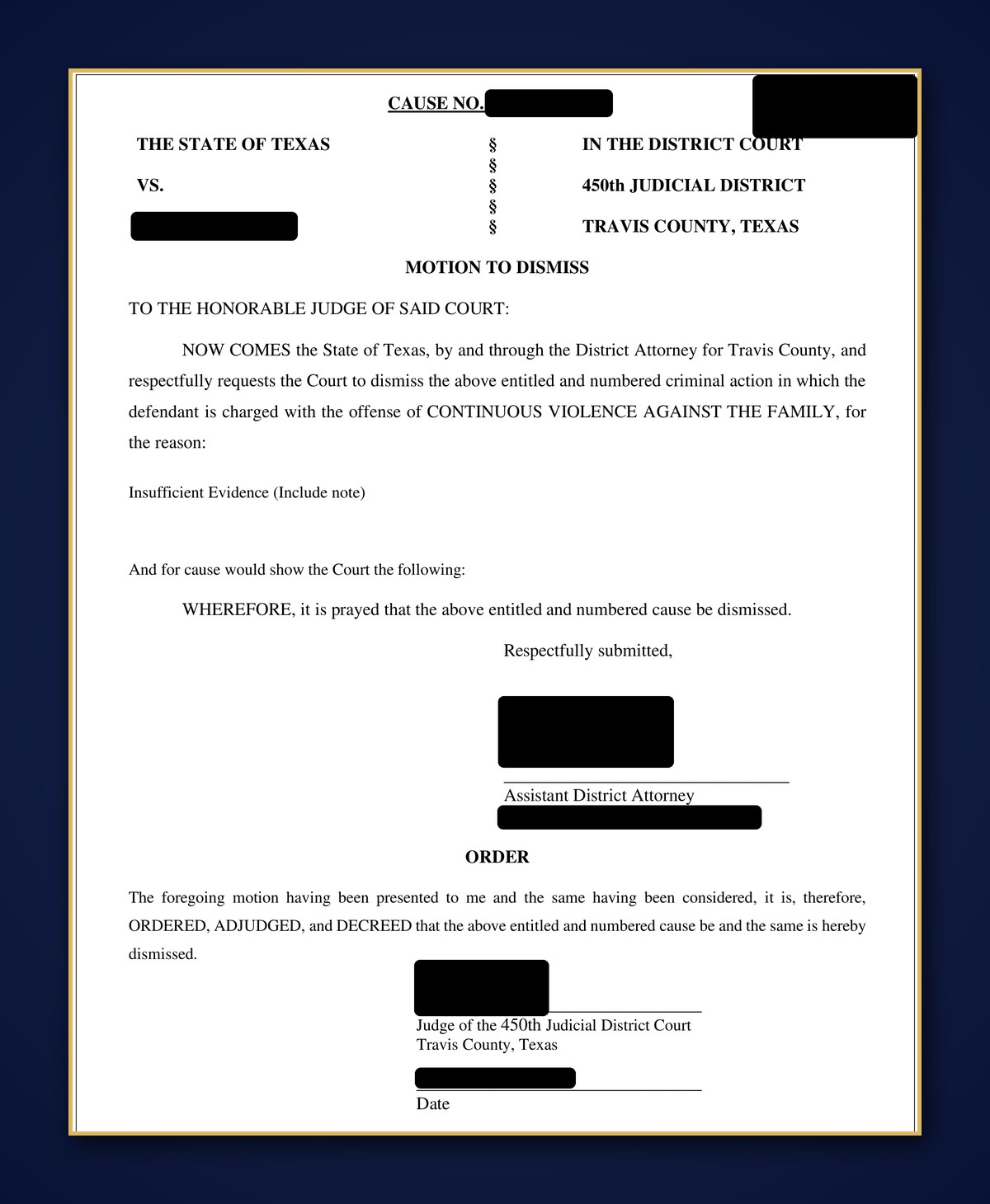
- Third degree felony. Continuous violence against the family, Travis County: dismissed for insufficient evidence (2026).
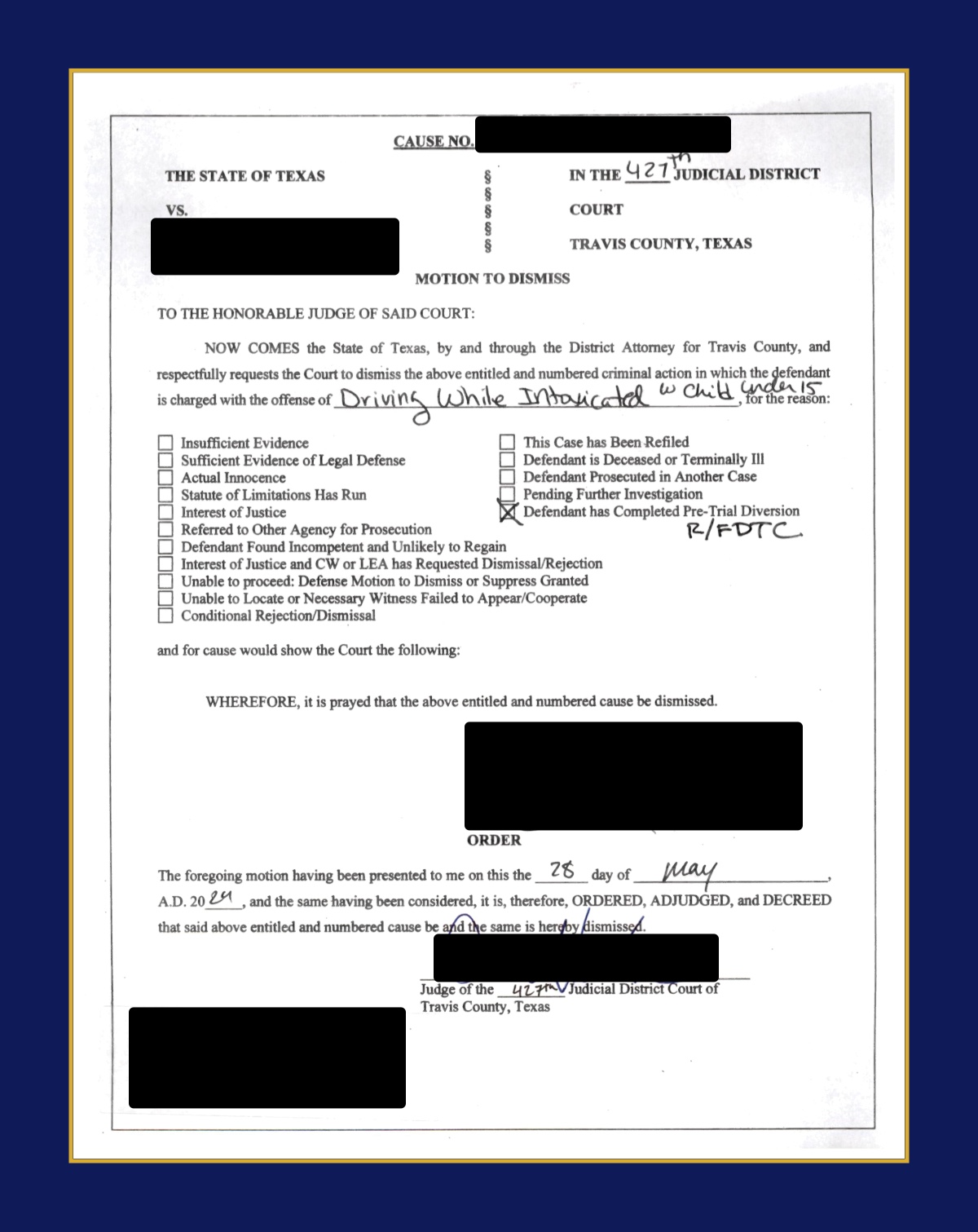
- State jail felony. Driving while intoxicated with a child under 15, Travis County: dismissed (May 2024) after the client completed the felony DWI treatment court program.
Past results do not guarantee a similar outcome. More on our Case Studies page.
Felony Punishment Ranges in Texas: Common Questions
Does a third degree felony mean I’ll go to prison?
Not necessarily. A third degree felony carries 2 to 10 years (§ 12.34), but that is the range the law allows, not a prediction. Probation is available for many third degree felonies. Whether prison is on the table depends on the facts, the evidence, any enhancements, and whether probation is available for the specific offense. Having no prior record helps, but it does not guarantee probation.
What is the difference between a state jail felony and a third degree felony?
A state jail felony carries 180 days to 2 years in a state jail (§ 12.35(a)). A third degree felony carries 2 to 10 years in prison (§ 12.34). A state jail felony can be punished as a third degree felony if the State proves a qualifying deadly weapon finding or a qualifying prior conviction (§ 12.35(c)), and the defense can contest that finding.
If the indictment says “habitual,” does that mean life?
No. A habitual allegation, if proved, sets a range of 25 to 99 years or life (§ 12.42(d)). It is still an allegation. The State has to prove both prior convictions, prove the person on trial is the person convicted, and show the second offense happened after the first conviction became final.
Can a felony charge be reduced to a misdemeanor in Texas?
For a state jail felony, Texas law provides two routes under § 12.44: the judge can impose misdemeanor jail time after a conviction, or the prosecutor can ask to prosecute the case as a Class A misdemeanor. Only the second route results in a misdemeanor conviction. For higher-degree felonies, a reduction usually comes through the charge itself, which is a question for your lawyer on your specific facts.
Is the fine in addition to prison time?
It can be. For state jail, third, second, and first degree felonies, the law allows a fine of up to $10,000 on top of confinement; it does not require one (§§ 12.32–12.35). Section 12.31 lists no fine for a capital felony. A few offense statutes set their own fines, and court costs and restitution are separate.
Does the range tell me how much time someone will serve?
No. The range is what the court may impose. Parole eligibility, credit for time already served, and whether sentences run together or back to back are separate questions with their own rules.
My son was charged with a second degree felony. How long could he be gone?
A second degree felony carries a range of 2 to 20 years (§ 12.33). That range is the limit of what the law allows, not a prediction, and it can move up if the State alleges and proves a prior felony conviction. The most useful step now is to get the actual charging paperwork to a lawyer who can see whether any enhancement is alleged.
What does “enhanced” mean on my husband’s paperwork?
It means the State is alleging a prior conviction to raise the punishment range, not to change the charge. The State still has to prove that prior conviction beyond a reasonable doubt and show it meets the statute’s requirements. Bring the current charging papers, any enhancement notice, and whatever records you have from the prior cases, including case numbers and the next court date.
Does the bond amount tell us how serious the range is?
Not directly. Bond is set on its own factors, and a high bond does not necessarily mean a high sentence. See our guide to personal, surety, and cash bonds in Austin.
What to Do Now
If you are looking at a felony charge, the degree tells you the range of punishment. It does not tell you what will happen. Here is what to do now:
- Get the actual charging documents (the complaint, and the indictment if one has been returned) in front of a defense lawyer.
- Find out whether any enhancement is alleged, and if so, whether the prior convictions are final, of the right kind, and in the right order.
- Ask whether the law allows a lower punishment for the charge, such as § 12.44 for a state jail felony, and whether probation or deferred adjudication is available.
- Know the punishment election deadline. In a jury trial, a written election for jury punishment has to be filed before jury selection begins, and a sworn motion for jury probation before trial. Art. 37.07, § 2(b).
Felony punishment ranges in Texas are where the analysis starts, not where it ends. CMK Defense represents people facing felony charges in Austin and across Travis, Williamson, Hays, and Bastrop counties. If you or someone in your family has been charged, we can review the paperwork with you and explain what applies to your case.
Call (512) 375-3303 or schedule a consultation. If someone is in custody right now, start with how to get out of jail in Austin.