
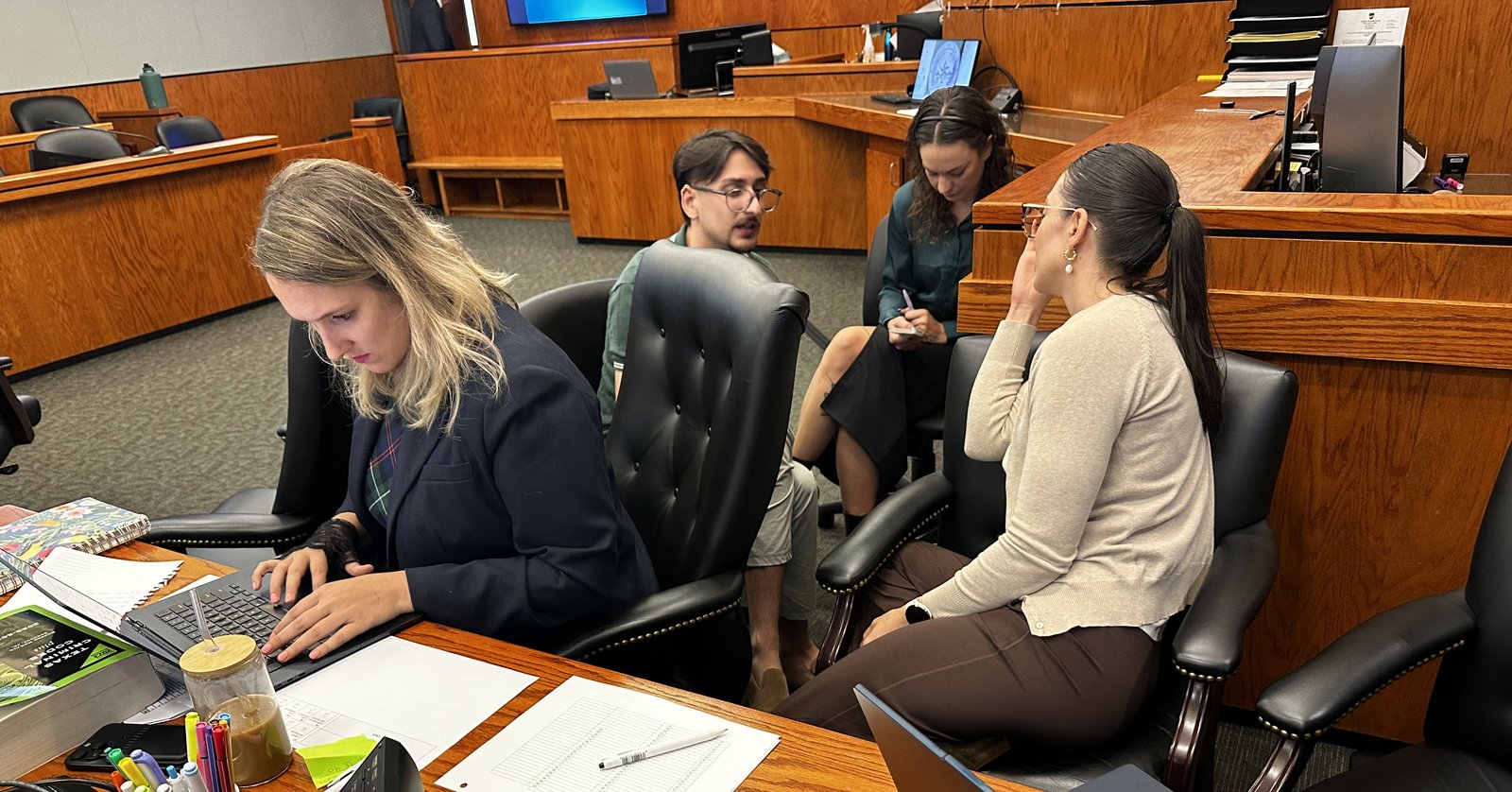
Angelica Cogliano, Deniz Kadirhan, and the CMK Defense trial team at counsel table during a self-defense murder trial.
By Deniz Kadirhan, CMK Defense, PLLC | Austin, Texas
Reviewed November 9, 2026
The short answer
Texas law can justify a shooting if you were justified in using force in the first place (for example, you did not provoke the fight) and you reasonably believed deadly force was immediately necessary, to the degree you used it, to protect yourself against someone’s use or attempted use of unlawful deadly force, or to prevent an imminent crime on the statute’s list, such as murder, robbery, or sexual assault. Tex. Penal Code § 9.32(a). The question is what you actually believed when you fired and whether an ordinary, careful person in your position would have believed it too. The belief has to be reasonable, not perfect. Once the evidence raises self-defense at trial, you do not have to prove it: the State has to disprove it beyond a reasonable doubt, and a jury with a reasonable doubt about self-defense must acquit. Tex. Penal Code § 2.03(d).
You had seconds to decide, and you decided. Everyone who has looked at it since has had days. A detective wants to “go over a few details,” a prosecutor is involved, and somebody has mentioned a grand jury. You weren’t thinking about Texas law that night. You reacted in the moment. Now the law is the whole question, and you need to know where you actually stand and what happens next.
Texas protects a person who uses deadly force in self-defense, but that protection depends on what happened, not on who you are. Owning the gun legally, being a good person, or being sure you were right does not settle it. In a shooting case, prosecutors test the same three questions again and again: who started it, whether deadly force still appeared necessary when you fired, and whether you were somewhere you had a right to be and not breaking the law. This page walks through each one, who has to prove what, and what a jury looks at. The grand jury gets a short section too, because in our experience that is where most of these cases go first, and it is rarely where they are decided.
This post covers Texas state law. Federal cases follow different rules.
What Texas Law Says About Self-Defense in a Shooting
Self-defense applies in a Texas shooting when you were justified in using force at all and you reasonably believed deadly force was immediately necessary, to the degree you used it, to protect yourself from unlawful deadly force or to prevent one of six serious crimes that was about to happen. The deadly-force rule is Section 9.32 of the Texas Penal Code:
“(a) A person is justified in using deadly force against another: (1) if the actor would be justified in using force against the other under Section 9.31; and (2) when and to the degree the actor reasonably believes the deadly force is immediately necessary: (A) to protect the actor against the other’s use or attempted use of unlawful deadly force; or (B) to prevent the other’s imminent commission of aggravated kidnapping, murder, sexual assault, aggravated sexual assault, robbery, or aggravated robbery.”
Two phrases carry most of the weight.
- “Reasonably believes.” The question is not what turned out to be true. You must actually have believed deadly force was necessary, and the belief must be one an ordinary, careful person in your position would have held in that moment. Texas defines a reasonable belief as one “held by an ordinary and prudent man in the same circumstances as the actor.” Tex. Penal Code § 1.07(a)(42).
- “Immediately necessary.” Not necessary later, not necessary to make a point. Necessary in that moment.
In some situations the law goes further and presumes your belief was reasonable. That happens when you knew or had reason to believe the other person was unlawfully and forcibly entering (or trying to enter) your occupied home, vehicle, or workplace; was unlawfully and forcibly removing you (or trying to) from one of those places; or was committing or trying to commit one of the six crimes listed above. Tex. Penal Code § 9.32(b)(1). The presumption holds only if you did not provoke the person and were not otherwise engaged in criminal activity at the time (a Class C traffic violation does not count). Tex. Penal Code § 9.32(b)(2)–(3). Keep those two conditions in mind, because they come back below. Without the presumption, the evidence can still support self-defense; the jury decides from the evidence whether your belief was reasonable.
Who Has to Prove Self-Defense in Texas?
You do not have to prove you were justified. Self-defense is a defense, and once there is some evidence supporting it, the State has to disprove it beyond a reasonable doubt. Saxton v. State, 804 S.W.2d 910, 913–14 (Tex. Crim. App. 1991). That evidence can come from any witness, a recording, or even the State’s own case. If the case reaches a jury, the judge must instruct them on exactly that:
“(d) If the issue of the existence of a defense is submitted to the jury, the court shall charge that a reasonable doubt on the issue requires that the defendant be acquitted.”
The defendant only has to produce some evidence that raises self-defense. After that, the State carries the “burden of persuasion to disprove the raised defense.” Zuliani v. State, 97 S.W.3d 589, 594 (Tex. Crim. App. 2003). The State does not have to call separate rebuttal witnesses to meet that burden; the jury decides from all the evidence whether the State has disproved self-defense beyond a reasonable doubt. Saxton, 804 S.W.2d at 913–14.
Why the jury has to be told who carries the burden
That rule protects you only if the jury actually hears it. In Brador v. State, a Travis County assault case, the jury was told it could acquit if it found from the evidence that the defendant acted in self-defense. Nobody told it that the State had to disprove self-defense, or that a reasonable doubt about self-defense required a not-guilty verdict. The Third Court of Appeals in Austin held that this was error. Self-defense was the central, hotly contested issue at trial, so the omission caused egregious harm, and the court reversed the conviction and sent the case back to the trial court. Brador v. State, 729 S.W.3d 434, 444–49 (Tex. App.–Austin 2025, pet. ref’d). CMK Defense partner Angelica Cogliano handled the appeal, and the Court of Criminal Appeals refused the State’s petition for review. Past results do not guarantee a similar outcome.
Brador was not a shooting case, but the rule it enforces applies to every self-defense claim in Texas, deadly force included. The court pointed to the language the State Bar’s pattern jury charge recommends: “The defendant is not required to prove self-defense. Rather, the state must prove, beyond a reasonable doubt, that self-defense does not apply to the defendant’s conduct.” See id. at 444–46. A charge that only says “acquit if you find self-defense” quietly asks the defendant to prove it. For a case that hasn’t gone to trial yet, the lesson is practical: the burden instruction is not boilerplate, and the defense has to make sure it is in the charge.
The Three Questions Prosecutors Test in a Self-Defense Shooting
The burden is real, and it is the State’s. But prosecutors meet it by attacking specific facts, and in shooting cases they return to the same three questions. For each one, here is what the State will argue, what the law actually requires, and where a case tends to get hard.
1. Did you provoke the attack, and did you try to end it?
What the State will argue. The self-defense statute takes the defense away from someone who provoked the other person’s attack:
“(b) The use of force against another is not justified: . . . (4) if the actor provoked the other’s use or attempted use of unlawful force, unless: (A) the actor abandons the encounter, or clearly communicates to the other his intent to do so reasonably believing he cannot safely abandon the encounter; and (B) the other nevertheless continues or attempts to use unlawful force against the actor[.]”
Provocation also costs you the presumption of reasonableness and the right to stand your ground. Tex. Penal Code § 9.32(b)(2), (c). So prosecutors look hard at the minutes before the shooting: the argument in the parking lot, the text sent an hour earlier, who walked toward whom.
What the law requires. Provocation in Texas means more than being rude or starting an argument. The Court of Criminal Appeals has held that a provocation instruction requires evidence of an act or words that provoked the attack, that were reasonably calculated to provoke it, and that were done for the purpose of creating a pretext to hurt the other person. Smith v. State, 965 S.W.2d 509, 513 (Tex. Crim. App. 1998). As the court put it, a person who does something, “even a wrongful act,” that provokes an attack does not lose the right of self-defense unless it was part of a larger plan to do harm. Id. at 518. An angry exchange, by itself, is not a setup.
As of November 9, 2026, the Court of Criminal Appeals is considering two questions about this rule in Ballester v. State, No. PD-0839-25, a case from the Third Court of Appeals in Austin: whether a provocation instruction requires evidence that the fight was a scheme to manufacture a self-defense claim, and if so, whether jurors should be told about that requirement. The case was submitted in September 2026 and has not been decided. A ruling could change how this part of a trial works.
The statute also builds in a way back. Someone who started a confrontation can regain the defense by leaving, or by clearly saying they are leaving when leaving isn’t safe, if the other person still uses or tries to use unlawful force. Tex. Penal Code § 9.31(b)(4).
Where it gets hard. Going back into the confrontation after it had ended, or going to get a weapon and then returning, gives the State facts to argue a plan. An argument is not proof, and the State still has to disprove self-defense. But this is where provocation cases are won or lost, and the answer comes from the minute-by-minute facts: why you went back, what you said, what the other person did when you got there.
2. Did deadly force still reasonably appear necessary when you fired?
What the State will argue. “Immediately necessary” is measured across the whole event, not just its start. Prosecutors look for a gap between shots, wounds in the back, a person who had turned or fallen, a weapon that was dropped. With video, they will slow it down and argue the threat ended before the last round.
What the law requires. The law asks what you reasonably believed from where you stood, at full speed, not what a frame-by-frame replay shows afterward. A belief can be reasonable and still turn out to be mistaken. Lighting, distance, what the other person said, and what you knew about them all go to what a reasonable person in your position would have believed. The defense work here is reconstructing that position: angles, timing, sound, sightlines.
Where it gets hard. If the evidence shows the person was plainly no longer a threat (down, disarmed, running away) when shots were fired, this is the hardest question to answer. The timing can matter shot by shot. The defense then focuses on what the evidence actually proves about timing, which is often less than the State’s first account of it.
One related point: if a shot meant for an attacker recklessly injures or kills an innocent bystander, self-defense is not available in a prosecution for that injury or death. Tex. Penal Code § 9.05.
3. Did you have a right to be there, and were you breaking the law?
What the State will argue. Two of the strongest protections in Texas self-defense law, the presumption of reasonableness and the no-duty-to-retreat rule, both depend on the person not being “engaged in criminal activity” at the time. Tex. Penal Code § 9.32(b)(3), (c). Prosecutors look for any offense happening at the same moment, even one unrelated to the shooting itself.
What the law requires. Losing those protections is not the same as losing self-defense. The core rule in Section 9.32(a) still applies, and the question becomes whether your belief was reasonable without the presumption’s help.
Where it gets hard. This is the one most people never see coming. Criminal activity at the moment you fired can cost you two protections. It takes away the presumption (a Class C traffic violation is the one listed exception), so the jury weighs whether your belief was reasonable without the law tilting in your favor. And it takes away the no-duty-to-retreat rule, which has no express traffic exception, so the State can argue you could have walked away. When the stand-your-ground rule does not apply, the jury may consider whether you could have safely retreated in deciding whether your belief was reasonable. Morales v. State, 357 S.W.3d 1, 5 (Tex. Crim. App. 2011). The State still has to disprove self-defense, but it gets to make both arguments.
Why “stand your ground” isn’t a blanket rule
Texas does have a stand-your-ground provision:
“(c) A person who has a right to be present at the location where the deadly force is used, who has not provoked the person against whom the deadly force is used, and who is not engaged in criminal activity at the time the deadly force is used is not required to retreat before using deadly force as described by this section.”
For a person who meets that description, the jury may not consider whether they failed to retreat. Tex. Penal Code § 9.32(d). Read it again and you will see questions one and three inside it. Stand your ground in Texas is not a separate right. It is what you get when those conditions are met, and it still requires that deadly force was otherwise justified.
Does a Self-Defense Shooting Go to a Grand Jury in Texas?
Usually, yes. In our experience in Travis, Williamson, Hays, and Bastrop counties, prosecutors routinely present shootings involving a self-defense claim to a grand jury. A grand jury is a panel of citizens that decides whether to bring a formal felony charge, called an indictment. It does not decide guilt. It takes at least nine grand jurors to indict, and the proceedings are secret. Tex. Code Crim. Proc. arts. 20A.202, 20A.301.
The defense has no right to put on its own case before the grand jury. The accused or their lawyer can address the grand jury only with the prosecutor’s approval. Tex. Code Crim. Proc. art. 20A.104. A defense lawyer can still ask the prosecutor to consider witness accounts, video, and other evidence that supports self-defense, and prosecutors in these counties sometimes accept a written presentation from the defense. When that works, the grand jury can decline to indict. It is worth pursuing, and it has to happen before the vote. But it is the exception, not the plan. A grand jury hears mostly the State’s side, and whether self-defense applies is usually decided later, by a trial jury. That is where the real work goes.
What Does a Jury Look at in a Self-Defense Shooting?
A self-defense case is decided by twelve people who were not there, hearing about a few seconds of your life over several days. The State carries the burden, and the three questions above are where it will focus its proof. Which evidence matters most depends on the facts of your case. No two of these cases turn on the same thing, and the job of the defense is to find what this one turns on and build the case around it. The evidence that tends to matter:
- The timeline. 911 timestamps, phone records, video, and how many seconds actually passed between the first threat and the last shot.
- Witnesses to the other person’s aggression. People who saw what they did that night, or who saw or heard earlier threats.
- The physical evidence. Distances, angles, where the casings fell, injuries on you, what the scene shows about who was moving toward whom.
- An expert. A use-of-force or shooting-reconstruction expert, when the State’s version depends on a reading of the scene a jury can’t check on its own.
- What you could see and hear. Video, witness accounts, and the layout of the scene can show your vantage point. Whether the jury also hears your account from you directly is a separate decision, covered next.
Should you testify at your own trial?
Your testimony can be the most powerful evidence in the courtroom, because you are the only person who can tell the jury what you saw and what you believed in that moment. It also puts you on cross-examination over every detail, and a small mistake under stress can be made to look like a lie. In some cases testifying is the right call. In others the defense is stronger without it, built from the other witnesses and the physical evidence, with the State still carrying its burden either way.
There is no general rule, and anyone who gives you one before seeing the evidence is guessing. Whether to testify is your decision, made after advice from a lawyer who knows the whole case, and it is usually made late, after the State has put on its evidence and you can both see what actually needs answering.
Results in Our Self-Defense Shooting Cases
These are self-defense shooting cases our lawyers have tried to a jury.
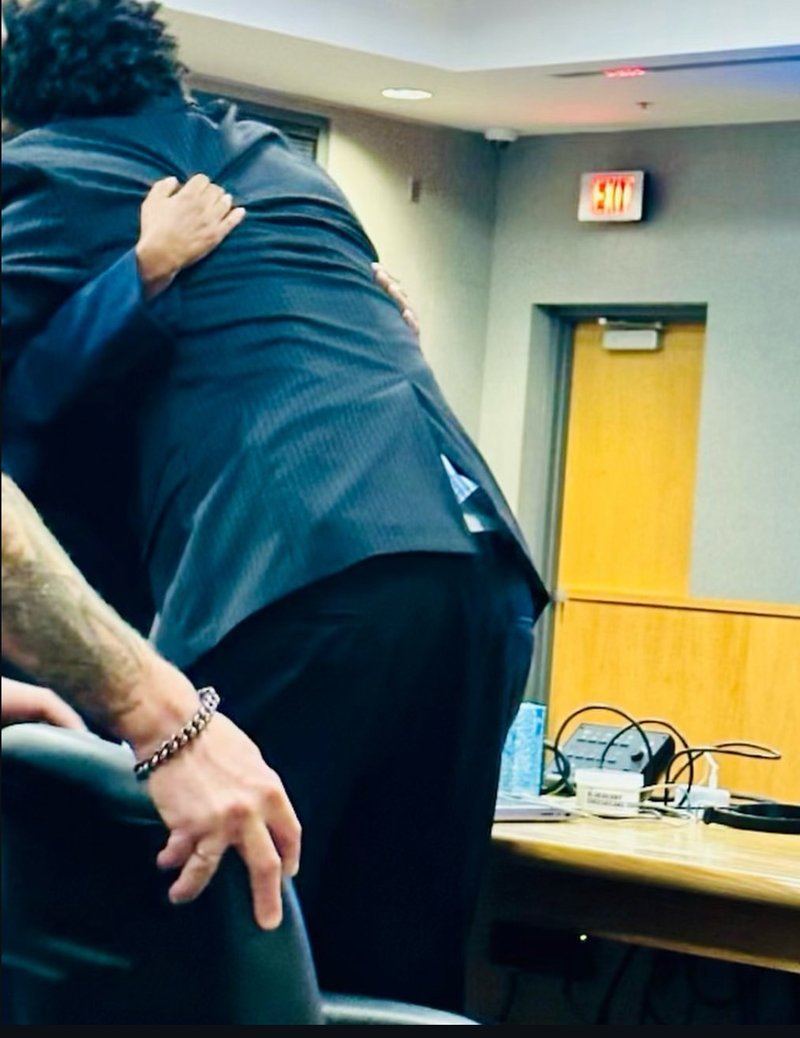
- Murder, Travis County: not guilty. Our client shot a man who came to his home after threatening him in online videos. The State argued the man was unarmed. Angelica Cogliano and co-counsel Charlie Baird tried the case, and the jury found our client not guilty of murder and not guilty of aggravated assault with a deadly weapon. Read the Travis County case study.
- Murder, Comal County: not guilty on every charge. The State said our client hunted a man down. The physical evidence, and an expert on how his mind works, told a different story. Read the Comal County case study.
- Murder, Caldwell County: not guilty of murder; manslaughter conviction with probation. Our client shot a man who was backing a car out of his driveway. The jury acquitted our client of murder, convicted him of the lesser charge of manslaughter, and recommended probation. Read the Caldwell County case study.
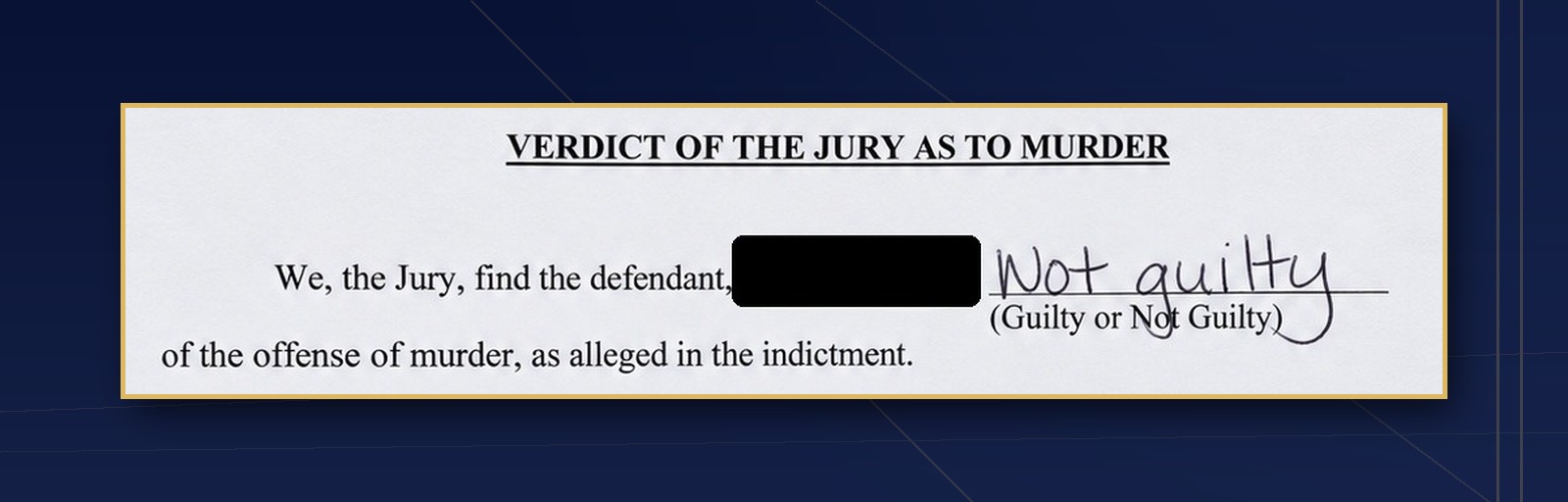
Past results do not guarantee a similar outcome. More on our Case Studies page.
What to Do Now If You Were Involved in a Shooting
Whether police are still investigating or charges have already been filed, the most useful things are also the simplest.
- Get help first, then stop talking about it. If anyone needs emergency help, call 911. After that, don’t discuss the shooting with detectives without a lawyer, with friends, in texts, or online. What you say can become evidence. (See Do I Have to Talk to Police in Texas If I’m Not Under Arrest?)
- Photograph your injuries, even minor ones, before they heal.
- Write down witness names and anyone who might have seen or recorded something, and give that list to your lawyer, not to anyone else. Don’t contact the other person’s family or the witnesses yourself.
- Move quickly on video. Businesses and neighbors record over footage, sometimes within days. A lawyer can ask for it to be preserved.
- If you were arrested, the first step is release. (See What Happens at a Magistration Hearing in Texas? and Personal, Surety, and Cash Bonds in Austin.)
- Talk to a defense lawyer as soon as you can. If the case has not gone to a grand jury yet, there may still be time to put evidence in front of the prosecutor before the vote.
Self-Defense Shootings in Texas: Common Questions
Is Texas a stand your ground state?
Yes, with conditions. Texas law says a person does not have to retreat before using otherwise justified deadly force if they had a right to be where they were, did not provoke the other person, and were not engaged in criminal activity at the time. Tex. Penal Code § 9.32(c). If you had no right to be there or were engaged in criminal activity, the jury may consider whether you could have safely retreated, but self-defense can still apply. If you provoked the fight, the provocation rules described above decide whether you kept the right to self-defense.
Do you have to retreat before shooting in Texas?
Not if you meet the conditions in Penal Code § 9.32(c). For someone who meets them, the jury cannot count a failure to retreat against them in deciding whether deadly force reasonably appeared necessary. For someone who doesn’t, failing to retreat is not automatically fatal to the defense; the jury may consider whether they could have safely retreated as one fact among many.
Can you be charged with murder if it was self-defense?
Yes. Self-defense is a defense raised against a charge, not something that prevents one from being filed. What it changes is the burden at trial: once there is evidence supporting self-defense, the State must disprove it beyond a reasonable doubt. That is a heavy burden, and it is the State’s to carry. (See The Four Types of Homicide in Texas for how the charge itself is chosen.)
Will I be arrested after a self-defense shooting in Texas?
Not always. Sometimes police make an arrest the same day, and sometimes they investigate and send the case to the district attorney without one. Either way, the case may still go to a grand jury, so not being arrested does not mean the matter is closed.
Can you shoot someone for breaking into your car in Texas?
A car break-in by itself does not justify shooting. If you were inside and knew or had reason to believe someone was unlawfully and forcibly entering or trying to enter the car, the law presumes your belief that deadly force was immediately necessary was reasonable, as long as you didn’t provoke the person and weren’t engaged in other criminal activity. Tex. Penal Code § 9.32(b). You still must actually have believed it. If you were outside the car and the person threatened you with deadly force, the ordinary self-defense rule can apply. If you used deadly force only to protect the car, a separate and much narrower test applies: you must have been justified in using ordinary force to protect it, deadly force must have been immediately necessary to prevent one of the listed crimes (including arson, burglary, robbery, and theft or criminal mischief at night) or to stop someone fleeing with the property right after one, and you must have reasonably believed the property could not be protected any other way or that using less force would expose you or someone else to a substantial risk of death or serious bodily injury. Tex. Penal Code §§ 9.41–.42. That is a much harder claim to make, and it turns on the specific facts.
How long does it take for a grand jury to decide on a shooting?
There is no single answer. It depends on how long the investigation takes, when autopsy and lab results come back, and the grand jury’s schedule; in our experience it is often weeks or months. Murder has no statute of limitations in Texas, so a prosecutor can present a shooting to a grand jury years later. Tex. Code Crim. Proc. art. 12.01(1)(A). If the person is in jail or out on bond and no indictment comes by the later of the end of the next court term or 180 days, the charge must be dismissed and the bond discharged unless the court finds good cause to keep it. Tex. Code Crim. Proc. art. 32.01(a). A long silence is not a decision. The waiting period is the time to prepare, not to assume it is over.
Should my husband talk to the police after a shooting?
If a detective asks for a voluntary interview, he can decline and talk to a defense lawyer first. If police are questioning him in custody, he should say clearly, out loud, that he wants a lawyer before answering questions; staying quiet without saying so may not protect him. What he says in the first hours is often what the case is built on, including small details he gets wrong under stress. (See Talking to Police in Texas.)
Can my son get his gun back after a self-defense shooting?
Usually not while the case is open. A gun seized in connection with a shooting is held by the police agency that took it. If there is no prosecution or conviction for an offense involving the gun, the magistrate must notify the person it was taken from in writing, and that person must ask the magistrate in writing for its return before the 61st day after the notice. Tex. Code Crim. Proc. art. 18.19(a), (c). Guns alleged to be stolen or prohibited follow separate rules. If the case is prosecuted, when and how the gun can be returned depends on how the case ends, and that is a question for his lawyer.
Where These Cases Are Decided
Whether self-defense applies in a Texas shooting comes down to whether you were justified in using force and what you actually and reasonably believed when you fired. Once the evidence raises self-defense, the State has to disprove it. Prosecutors will test who started it, whether deadly force still appeared necessary, and whether you were somewhere you had a right to be and not breaking the law. If they present the case to a grand jury, it decides whether to indict. If the case goes to trial, the jury decides guilt and whether the State has disproved self-defense. The work between now and then is building what that jury will hear.
CMK Defense represents people facing self-defense cases in Austin and across Travis, Williamson, Hays, and Bastrop counties, from aggravated assault to murder. If you or someone in your family is under investigation or facing a charge after a shooting, call (512) 375-3303 or schedule a consultation to talk through where the case stands and what can be done now.