
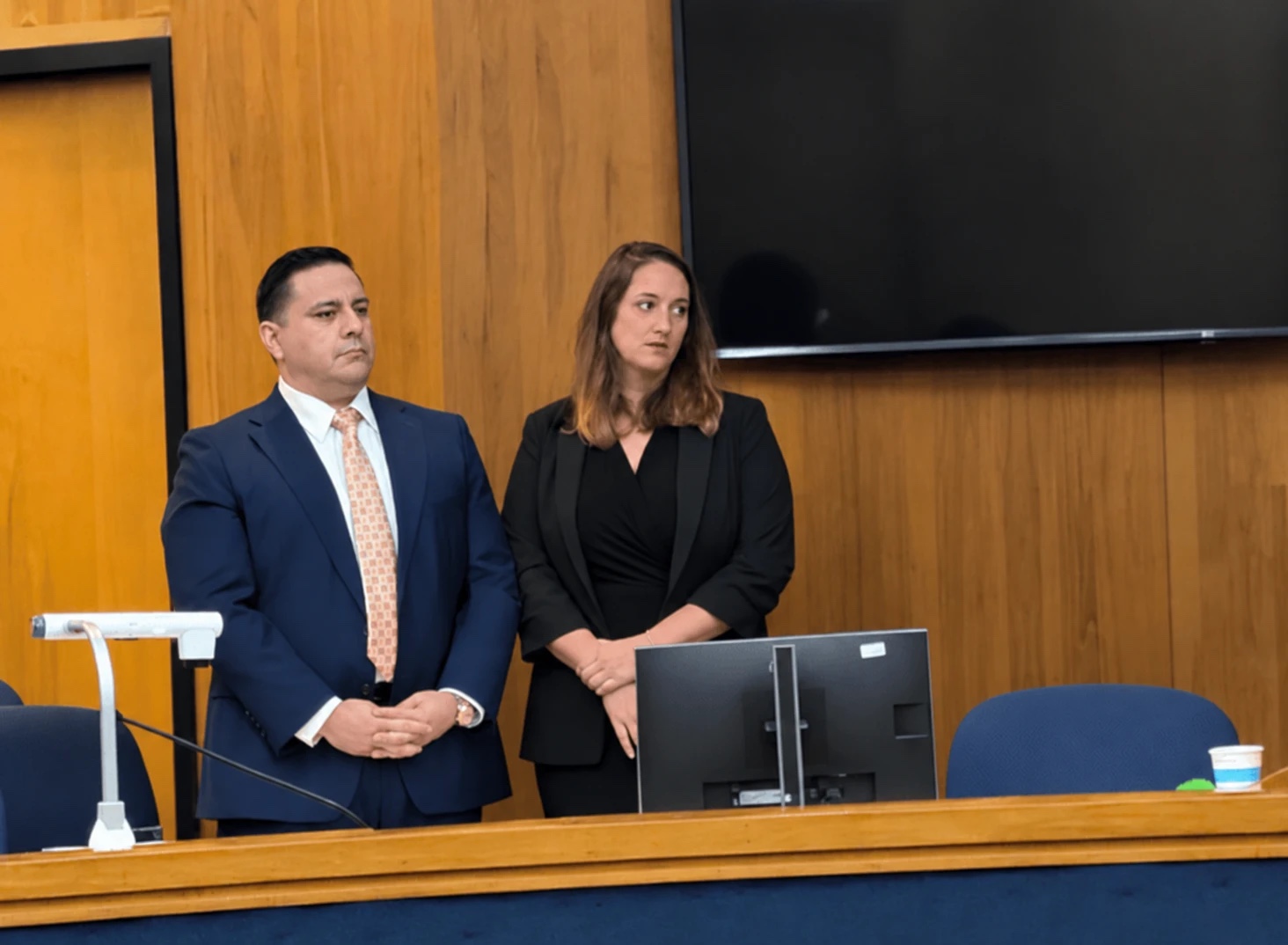
By Angelica Cogliano, CMK Defense, PLLC | Austin, Texas
Reviewed October 31, 2026
The short answer
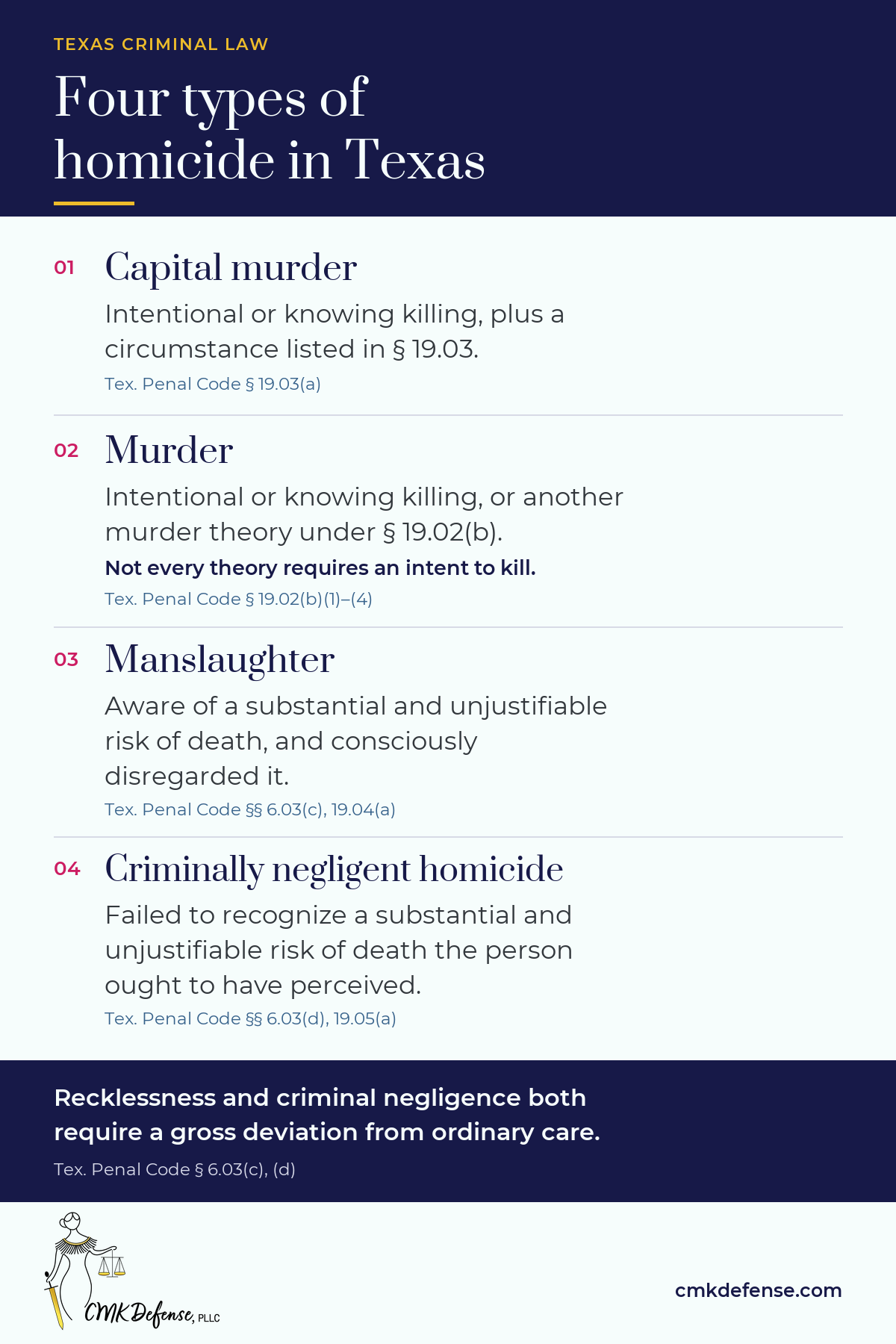
Texas has four criminal homicide offenses: capital murder, murder, manslaughter, and criminally negligent homicide. Tex. Penal Code § 19.01(b). In all four, someone caused a death. What separates them is mostly what the State can prove about the mind of the person who caused it: an intent to kill or to cause serious bodily injury (murder), an intentional or knowing killing plus one more fact, such as the age or job of the person who died (capital murder), awareness of a deadly risk that the person ignored (manslaughter), or failure to see a risk an ordinary person would have seen (criminally negligent homicide). Texas has no “first-degree murder” or “second-degree murder.” Intoxication manslaughter is a separate offense with its own rules.
Picture an argument outside a bar downtown. One punch, a fall, a head hitting the curb. By morning, the man who threw the punch is in the Travis County jail, and the word on the paperwork is murder.
If that is your son, daughter, sister, husband, or you, here is the first thing to know: murder is the charge, not the conclusion.
Texas has four levels of homicide, and the same death can often be charged at more than one of them. The person who died is the same in every version. What usually changes is what the State can prove about one moment in the mind of the person who caused the death. The charge filed at arrest is the State’s opening position. What the State can actually prove is a separate question, and that question is where a homicide defense lives.
The Four Types of Homicide in Texas at a Glance
| Offense | What the State must prove | Grade and punishment | Probation? |
|---|---|---|---|
| Capital murder | An intentional or knowing killing, plus an added circumstance listed in § 19.03(a) | Capital felony: life without parole, or death if the State seeks it (life with parole if under 18). § 12.31(a) | No |
| Murder | An intentional or knowing killing, or one of the other three ways in § 19.02(b): serious bodily injury, felony murder, or fentanyl delivery | First-degree felony: 5 to 99 years or life. § 12.32. With sudden passion: 2 to 20 years. § 19.02(d) | Almost never |
| Manslaughter | Saw the risk of death and consciously ignored it. § 19.04(a) | Second-degree felony (almost always): 2 to 20 years. § 12.33 | Yes, with limits |
| Criminally negligent homicide | Should have seen the risk, but did not. § 19.05(a) | State jail felony: 180 days to 2 years. § 12.35(a). 2 to 10 years with a deadly weapon finding. § 12.35(c)(1) | Yes, with limits |
| Intoxication manslaughter (separate offense) | No mental state required. § 49.11(a) | Second-degree felony in most cases: 2 to 20 years. § 49.08(b) | Limited; no deferred adjudication |
Every level except capital murder also carries a possible fine of up to $10,000. Tex. Penal Code §§ 12.32(b), 12.33(b), 12.34(b), 12.35(b).
Why Can the Same Death Be Charged Four Different Ways?
Because Texas defines every kind of criminal homicide in one sentence, and the main thing that moves is the mental state:
A person commits criminal homicide if he intentionally, knowingly, recklessly, or with criminal negligence causes the death of an individual.
The next subsection names the four offenses:
Criminal homicide is murder, capital murder, manslaughter, or criminally negligent homicide.
The four mental states, in plain English
The Penal Code defines each mental state in § 6.03. In everyday terms:
- Intentionally. Causing the death was the person’s conscious objective. § 6.03(a).
- Knowingly. The person was aware the conduct was reasonably certain to cause the death. § 6.03(b).
- Recklessly. The person saw a substantial and unjustifiable risk of death and consciously ignored it. § 6.03(c).
- With criminal negligence. The person should have seen that risk, but did not. § 6.03(d).
For the last two, the law sets a high bar. Ignoring the risk, or failing to see it, has to be “a gross deviation from the standard of care that an ordinary person would exercise under all the circumstances as viewed from the actor’s standpoint.” § 6.03(c), (d). Ordinary carelessness is not enough. And proving that the bar was met is the State’s job, not the defense’s.
The rule that turns four charges into a ladder
One provision in the Code of Criminal Procedure explains why these offenses stack on top of each other instead of sitting in separate boxes. An offense is a lesser included offense if:
it differs from the offense charged only in the respect that a less culpable mental state suffices to establish its commission
Tex. Code Crim. Proc. art. 37.09(3).
So the lower rungs usually sit inside the higher ones. A murder indictment can carry manslaughter and criminally negligent homicide with it, whether or not the State mentions them. But a lower rung is not automatic. A judge compares the charge as written in the indictment with the lesser offense, then asks whether there is some evidence that would let a jury rationally find that, if the person is guilty, he is guilty only of the lesser offense. Hall v. State, 225 S.W.3d 524, 535–36 (Tex. Crim. App. 2007). That fight over the jury instructions is often one of the most important in a homicide trial.
That is why, when no one disputes who caused the death, the real question is often not “Did he cause it?” but “What can the State prove he was thinking when he did?” Identity, causation, and self-defense can be the central fight too, and we come back to them below.
Is There First-Degree Murder in Texas?
No. Texas does not divide murder into “first-degree” and “second-degree” murder the way many states and TV shows do. Texas has one murder statute, § 19.02.
In Texas, “first degree” and “second degree” describe punishment grades, not kinds of murder. Murder is a first-degree felony. § 19.02(c). Manslaughter is a second-degree felony. § 19.04(b). And a murder conviction with a sudden passion finding is punished as a second-degree felony. § 19.02(d).
What Is the Difference Between Capital Murder and Murder in Texas?
Capital murder is murder plus one more fact the State has to prove. It is not a different kind of killing, and unlike the other levels, the difference is not about mental state. The statute starts this way:
A person commits an offense if the person commits murder as defined under Section 19.02(b)(1) and: . . .
Section 19.02(b)(1) is an intentional or knowing killing. The word “and” leads to a list. In summary, capital murder covers:
- killing a peace officer or firefighter acting in the lawful discharge of an official duty, when the person knows it is a peace officer or firefighter, § 19.03(a)(1);
- intentionally committing the murder in the course of committing or attempting kidnapping, burglary, robbery, aggravated sexual assault, arson, obstruction or retaliation, or certain terroristic threats, § 19.03(a)(2) (a driver or lookout who did not fire can be charged with this too, under the law of parties in Texas);
- murder for hire, or hiring someone else to commit one, § 19.03(a)(3);
- murder while escaping from a penal institution, and certain murders committed while incarcerated, § 19.03(a)(4)–(6);
- killing more than one person in the same criminal transaction, or in different transactions under the same scheme or course of conduct, § 19.03(a)(7);
- killing a child younger than 15, § 19.03(a)(8)–(9); and
- killing a judge or justice because of the judge’s service or status, § 19.03(a)(10).
Where the extra element gets contested
Each of those circumstances is an element the State must prove beyond a reasonable doubt. Each one is a separate place the State’s case can fall short.
- Knowledge. In a peace officer case, the State has to prove the person knew it was an officer. The law presumes that knowledge if the officer was wearing a distinctive uniform or badge. § 19.03(d). Without one, it is a real question.
- Intent, not knowledge. The robbery-type theory requires that the person “intentionally commits the murder.” § 19.03(a)(2). A knowing killing during a robbery does not meet it. One word can move a case down a full rung.
- “In the course of.” Whether the killing happened during the other felony, or before anyone had that felony in mind, is a fact question.
- One transaction or two. Cases with more than one death turn on how the events connect.
When the State cannot prove the extra element, the statute itself steps down a level:
If the jury or, when authorized by law, the judge does not find beyond a reasonable doubt that the defendant is guilty of an offense under this section, he may be convicted of murder or of any other lesser included offense.
The punishment for capital murder
Capital murder is a capital felony. § 19.03(b). If the State seeks the death penalty, the punishment is life without parole or death. If it does not, the punishment is life without parole for someone who was 18 or older at the time, and life (with the possibility of parole) for someone who was younger than 18. § 12.31(a). No one can be sentenced to death for an offense committed before age 18. § 8.07(c).
Murder in Texas: What the State Has to Prove
Texas has one murder statute with four ways of committing it. Under § 19.02(b), a person commits murder if the person:
(1) intentionally or knowingly causes the death of an individual;
(2) intends to cause serious bodily injury and commits an act clearly dangerous to human life that causes the death of an individual;
(3) commits or attempts to commit a felony, other than manslaughter, and in the course of and in furtherance of the commission or attempt, or in immediate flight from the commission or attempt, the person commits or attempts to commit an act clearly dangerous to human life that causes the death of an individual; or
(4) knowingly manufactures or delivers a controlled substance included in Penalty Group 1-B . . . and an individual dies as a result of injecting, ingesting, inhaling, or introducing into the individual’s body any amount of the controlled substance manufactured or delivered by the actor . . . .
The fourth way, added in 2023, covers deaths from fentanyl and other Penalty Group 1-B drugs. Our murder defense page covers it in more detail. This post focuses on the first three.
“I never meant to kill him.”
That sentence is true for a lot of people charged with murder. It is also the reason the second way exists. Subsection (b)(2) does not require an intent to kill. It requires an intent to cause serious bodily injury, plus an act clearly dangerous to human life.
In a one-punch case, those are the two things the State has to prove, and neither one follows automatically from the death. Intending to hit someone, or to end a fight, is not the same as intending serious bodily injury. Whether a single punch was an act clearly dangerous to human life is a question the jury answers from the evidence: the video, the size of the two men, what was said before and after, and what happened in the seconds that followed. The fact that someone died does not answer it.
But saying “I didn’t mean to” is not, by itself, enough to move a case down a rung. Each lower offense has its own elements, and there has to be evidence that supports it. In one case, the Court of Criminal Appeals held that manslaughter can be a lesser offense of this kind of murder, but that a man who pointed a gun, fired twice, fled, and later told a friend “I didn’t mean to shoot anyone” was not entitled to have the jury consider it. Nothing in the evidence showed recklessness. Cavazos v. State, 382 S.W.3d 377, 383–85 (Tex. Crim. App. 2012).
That is why the investigation matters so much. If the evidence shows he was aware of a risk and ignored it, the question becomes manslaughter. If it shows he should have seen the risk but did not, it becomes criminally negligent homicide. That evidence has to be found and presented. It does not appear on its own.
Felony murder, briefly
Subsection (b)(3) is often called felony murder: a death caused by a dangerous act during another felony. The State does not have to prove an intent to kill. The mental state that matters is the one required for the underlying felony. Felony murder is still murder, a first-degree felony.
Sudden passion changes the sentence, not the conviction
Murder is a first-degree felony, with one exception the defense can raise at the punishment phase:
At the punishment stage of a trial, the defendant may raise the issue as to whether he caused the death under the immediate influence of sudden passion arising from an adequate cause. If the defendant proves the issue in the affirmative by a preponderance of the evidence, the offense is a felony of the second degree.
Both terms have legal definitions. Sudden passion means passion directly caused by provocation from the person who died (or someone acting with that person), arising at the time of the offense and not solely from earlier provocation. Adequate cause means a cause that would commonly produce anger, rage, resentment, or terror in a person of ordinary temper, enough to make the mind incapable of cool reflection. § 19.02(a)(1)–(2). Anger alone is not enough.
Sudden passion does not erase the murder conviction, and it does not turn it into manslaughter. It moves the punishment range from 5 to 99 years or life down to 2 to 20 years. That difference is enormous. In a Travis County murder trial we tried, the jury found our client guilty, then found he acted under sudden passion, and assessed five years. KXAN reported on the verdict.
What Is the Difference Between Murder and Manslaughter in Texas?
In the usual case, the difference is mental state. The most common murder charge requires that the person caused the death intentionally or knowingly. Manslaughter requires only that the person was aware of a deadly risk and consciously ignored it. Murder can also be proved in the other ways covered above, and some of those require no intent to kill at all. The manslaughter statute reads:
A person commits an offense if he recklessly causes the death of an individual.
Recklessness has a specific meaning:
A person acts recklessly, or is reckless, with respect to circumstances surrounding his conduct or the result of his conduct when he is aware of but consciously disregards a substantial and unjustifiable risk that the circumstances exist or the result will occur. The risk must be of such a nature and degree that its disregard constitutes a gross deviation from the standard of care that an ordinary person would exercise under all the circumstances as viewed from the actor’s standpoint.
That definition has three parts the State has to prove: the person actually saw the risk, consciously ignored it, and ignoring it was a gross deviation from ordinary care.
Why statements matter so much
The first part is a fact about what was in someone’s head. The State almost never has direct evidence of that, so it builds its case from circumstances. That is why statements matter so much in homicide cases: what he told police that night, what he texted a friend, what he said on a recorded jail call. Each one can be offered as evidence of what he knew and when.
If police want to talk, read Do I Have to Talk to Police in Texas If I’m Not Under Arrest? first. If they ask for a phone, read Can Police Search Your Phone Without a Warrant in Texas?
How manslaughter reaches a jury in a murder case
Manslaughter is usually a lesser included offense of murder, so when the evidence supports it, a jury hearing a murder case can be asked to consider manslaughter instead. That possibility shapes negotiations as well as verdicts. Two of our own cases show both:
- A verdict. In a Caldwell County murder trial where self-defense was the defense, the jury found our client not guilty of murder, convicted him of the lesser offense of manslaughter, and recommended probation. The court placed him on 10 years of probation.
- A negotiation. In a Travis County murder trial, the offer before trial was 40 years. While the jury was deliberating, the State offered 3 years on a lesser charge of manslaughter, and our client accepted.
Every case is different, and past results do not guarantee a similar outcome.
The punishment for manslaughter
Manslaughter is a second-degree felony, punishable by 2 to 20 years. §§ 19.04(b), 12.33. There is one narrow exception: it becomes a first-degree felony if the death was caused by conduct that damages a critical infrastructure facility. § 19.04(b).
Manslaughter vs. Criminally Negligent Homicide in Texas
The line between the bottom two rungs comes down to one question: did he see the risk?
A person acts with criminal negligence, or is criminally negligent, with respect to circumstances surrounding his conduct or the result of his conduct when he ought to be aware of a substantial and unjustifiable risk that the circumstances exist or the result will occur. The risk must be of such a nature and degree that the failure to perceive it constitutes a gross deviation from the standard of care that an ordinary person would exercise under all the circumstances as viewed from the actor’s standpoint.
Side by side:
- Manslaughter: he saw the danger and acted anyway.
- Criminally negligent homicide: he did not see the danger, and an ordinary person in his position would have.
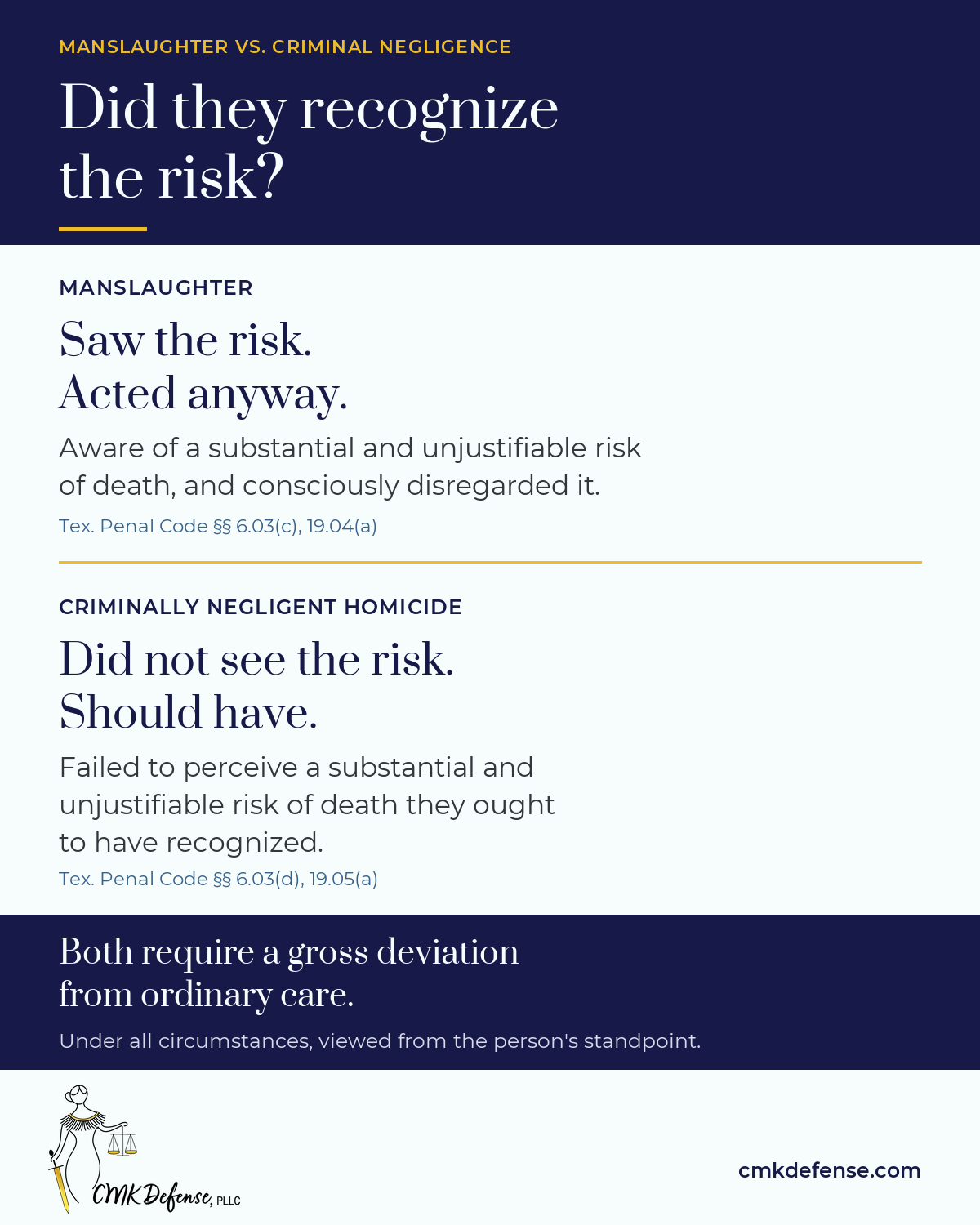
Both still require a gross deviation from ordinary care. A death that follows a misjudgment an ordinary person might also have made does not meet either definition.
Criminally negligent homicide: the fourth level
A person commits an offense if he causes the death of an individual by criminal negligence.
Criminally negligent homicide is a state jail felony, the lowest grade of any homicide offense. § 19.05(b). The range is 180 days to 2 years in a state jail. § 12.35(a). It is still a felony, with everything a felony record brings for work, housing, and gun rights. And if the State proves a deadly weapon was used or exhibited (a car can count), the punishment rises to the third-degree range, 2 to 10 years. §§ 12.35(c)(1), 12.34.
Can You Get Probation for Homicide in Texas?
It depends on the level. This is one of the most concrete reasons the rung on the ladder matters.
- Capital murder: no. A judge cannot order community supervision after a capital murder conviction. Tex. Code Crim. Proc. art. 42A.054(a)(3).
- Murder: almost never. A judge cannot place someone convicted of murder on probation, and a jury cannot recommend it. Arts. 42A.054(a)(2), 42A.056(3). Deferred adjudication is available only if the judge finds the person “did not cause the death of the deceased, did not intend to kill the deceased or another, and did not anticipate that a human life would be taken.” Art. 42A.102(b)(4).
- Manslaughter: possibly. A judge can order probation only if the sentence is 10 years or less and there is no deadly weapon finding. Arts. 42A.053(c)(1), 42A.054(b). A jury can recommend probation if the sentence is 10 years or less and the person has never been convicted of a felony, even when a deadly weapon was used. Arts. 42A.055(b), 42A.056(1). That is what happened in the Caldwell County case above. Deferred adjudication is not barred by statute. Art. 42A.102(b).
- Criminally negligent homicide: possibly. The probation bars that apply to murder do not apply here. Arts. 42A.054(a), 42A.056, 42A.102(b). A deadly weapon finding still takes judge-ordered probation off the table. Art. 42A.054(b).
The same death, charged as murder, usually means prison. Charged as manslaughter, probation may be on the table. For more on how probation works, see Probation in Texas.
Intoxication Manslaughter Is Not on the Ladder
One homicide offense sits outside this structure. Intoxication manslaughter applies when a person operates a motor vehicle in a public place (or an aircraft, watercraft, or amusement ride) while intoxicated and, by reason of that intoxication, causes a death “by accident or mistake.” § 49.08(a). It is a second-degree felony, except where § 49.09 raises it. § 49.08(b). And it does not depend on mental state at all:
Notwithstanding Section 6.02(b), proof of a culpable mental state is not required for conviction of an offense under this chapter.
Because the mental-state ladder does not apply, the defense looks elsewhere: whether he was operating the vehicle, whether he was intoxicated as the law defines it, and whether the intoxication, rather than something else about the crash, caused the death. Deferred adjudication is not available. Art. 42A.102(b)(1)(A). Our intoxication manslaughter page explains these cases in detail.
How a Homicide Charge Moves Down the Ladder
The level on the paperwork is a choice the State made, based on what it believed it could prove at the time. We test that choice rung by rung:
- The mental-state evidence. We do not just review the State’s evidence; we find our own. Video, witnesses, statements, and the timeline get examined for what they actually show about awareness and intent, not what the arrest report says they show. An independent investigation often finds the witness or the recording the first report missed.
- Causation. The State has to prove the conduct caused the death. The medical cause of death, and anything that intervened, is part of that question.
- Unlawfully obtained evidence. A statement taken in violation of someone’s rights, or evidence seized under a defective warrant, can be challenged before trial. Tex. Code Crim. Proc. arts. 38.22, 38.23.
- Self-defense. If he acted in self-defense, the question is not which rung applies but whether any does. Three of the murder acquittals in our results below were self-defense cases. See our self-defense page for how Texas law works, and when self-defense applies in a Texas shooting.
- Before indictment. A felony case goes to a grand jury, which decides whether to indict and on what charge. Tex. Const. art. I, § 10. What the defense does before that vote can matter.
None of this is automatic, and not every case has a lower rung the evidence supports. No lawyer can promise an outcome. But in every case, the State has to prove each element of the charge it chose. That is where we start.
Results in Our Homicide Cases
These are homicide cases we tried, with the full outcome of each, including the ones that ended in a conviction on a lower rung. Every case turns on its own facts.
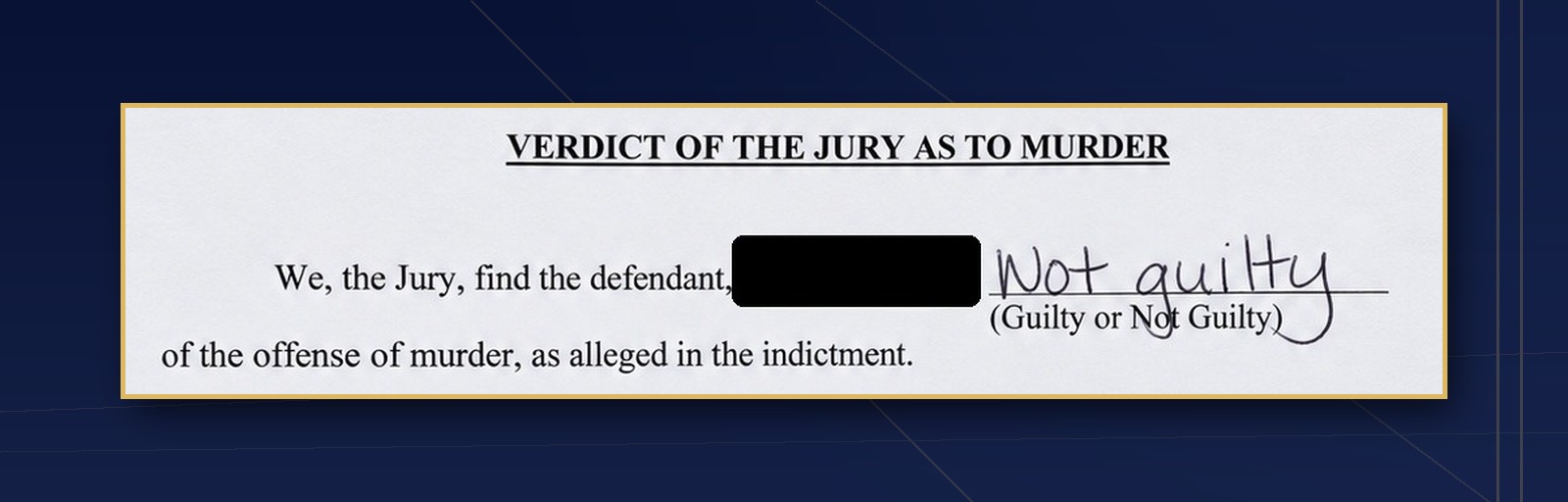
- Not guilty of murder, Comal County. The State said our client hunted a man down, and its offer was 40 years. The physical evidence did not fit that story, and the jury acquitted him on every charge after a little over an hour.
- Not guilty of murder, Travis County. Our client shot a man who had threatened him online and then came to his home. The jury found him not guilty of murder and of aggravated assault with a deadly weapon, accepting self-defense even assuming the man was unarmed.
- Not guilty of murder, DeSoto County, Mississippi. In this 2020 trial, the jury acquitted Angelica Cogliano’s client of all charges.
- Not guilty of murder or manslaughter, Travis County. With co-counsel and former judge Charlie Baird. The jury rejected the top two rungs and convicted on the lowest, criminally negligent homicide. The sentence was probation.
- Not guilty of murder, Caldwell County. Self-defense was the defense. The jury acquitted on murder, convicted on the lesser offense of manslaughter, and recommended probation. The court placed him on 10 years of probation.
- Murder reduced to manslaughter, Travis County. The offer before trial was 40 years. While the jury was deliberating, the State offered 3 years on manslaughter, and our client accepted.
- Sudden passion finding, Travis County. The jury convicted on murder, then found sudden passion and assessed five years. KXAN reported on the verdict.
Past results do not guarantee a similar outcome. See all of our homicide case studies.
Homicide Charges in Texas: Frequently Asked Questions
Can a murder charge be reduced to manslaughter in Texas?
Yes. It can happen at the grand jury, through negotiation, or by a jury verdict on a lesser included offense. Manslaughter differs from murder only in mental state, which makes it a lesser included offense under Tex. Code Crim. Proc. art. 37.09(3). Whether it is realistically in play depends on what the evidence shows about intent.
Can you be charged with murder for one punch in Texas?
Yes, but charging murder and proving it are different things. A one-punch case is usually charged under Tex. Penal Code § 19.02(b)(2), which does not require an intent to kill. The State must still prove an intent to cause serious bodily injury and an act clearly dangerous to human life, and neither follows automatically from the death. Where that proof falls short, murder fails. A lower charge, such as manslaughter, still needs its own proof.
Is criminally negligent homicide a felony in Texas?
Yes. It is a state jail felony, punishable by 180 days to 2 years in a state jail. Tex. Penal Code §§ 19.05(b), 12.35(a). It is the lowest grade of homicide in Texas, but it is still a felony. A deadly weapon finding raises the range to 2 to 10 years. § 12.35(c)(1).
Can you get probation for manslaughter in Texas?
Possibly. A judge can order probation if the sentence is 10 years or less and there is no deadly weapon finding. Tex. Code Crim. Proc. arts. 42A.053(c)(1), 42A.054(b). A jury can recommend probation if the sentence is 10 years or less and the person has no prior felony conviction, even if a deadly weapon was used. Arts. 42A.055(b), 42A.056(1).
Can you get probation for murder in Texas?
Almost never. A judge cannot order probation after a murder conviction, and a jury cannot recommend it. Tex. Code Crim. Proc. arts. 42A.054(a)(2), 42A.056(3). Deferred adjudication is possible only if the judge finds the person did not cause the death, did not intend to kill, and did not anticipate that a life would be taken. Art. 42A.102(b)(4).
Does Texas seek the death penalty in every capital murder case?
No. The State decides whether to seek it. When it does not, the punishment for capital murder is life without parole if the person was 18 or older at the time, and life with the possibility of parole if the person was younger than 18. Tex. Penal Code § 12.31(a).
Is intoxication manslaughter the same as DWI?
No. DWI does not require that anyone was hurt. Intoxication manslaughter applies when an intoxicated person operating a vehicle, boat, aircraft, or amusement ride causes a death because of the intoxication. Tex. Penal Code § 49.08(a). It is usually a second-degree felony, and unlike the other homicide offenses, it requires no proof of a mental state. § 49.11(a).
Does self-defense reduce a murder charge to manslaughter?
No. Self-defense is not a halfway point. If the use of deadly force was justified, it is a complete defense, and the result is not guilty. Tex. Penal Code §§ 9.02, 9.31, 9.32. Whether manslaughter is also in play is a separate question that depends on the evidence. See our self-defense page.
Is there a statute of limitations for murder or manslaughter in Texas?
No. There is no time limit for filing a murder or manslaughter charge. Tex. Code Crim. Proc. art. 12.01(1)(A).
My son was charged with murder after a fight. Can the charge still change?
Yes. The charge at arrest is the State’s starting position. A grand jury decides what, if anything, to indict, and after indictment the level can still move through negotiation or a verdict on a lesser offense. What moves it is evidence about what he was thinking, which is why the investigation should start early.
Can he get a bond on a murder charge? He lives out of state.
Usually, but not always. Since November 2025, the Texas Constitution requires a judge to deny bail to a person accused of murder or capital murder if, after a hearing, the State shows by a preponderance of the evidence that bail will not reasonably prevent the person from willfully missing court, or shows by clear and convincing evidence that bail will not reasonably ensure the safety of the community, law enforcement, and the complainant. Tex. Const. art. I, § 11d(a)–(b). Bail can also be denied in a capital case when the proof is evident. Tex. Const. art. I, § 11. If bond is set, whether he can go home to another state depends on the conditions the court sets, and those can be challenged. See How a Bond Reduction Hearing Works in Travis County.
Are his phone calls from jail recorded?
Yes, and they can be used as evidence. When the charge depends on what he was thinking, a call home about that night can become the State’s evidence of his state of mind. Before your family talks with him about the case, read Are Jail Phone Calls Recorded and Used Against You in Texas?
What to Do Now
The proof that decides the level is built from evidence, and much of it is created or lost in the first days:
- Do not discuss that night with anyone but a lawyer: not police, not friends, not on a jail call, not by text.
- Write down the names of everyone who was there, while memories are fresh.
- Identify the cameras. Bars, neighboring businesses, rideshare drivers, and phones. Businesses do not keep video forever.
- Get a lawyer involved before the grand jury acts, while the level of the charge is still being decided.
A homicide charge is the most serious accusation a person can face. It is not the whole story of who he is, and it is not the end of the story. If you or someone you love has been charged with a homicide offense in Travis, Williamson, Hays, or Bastrop County, call CMK Defense at (512) 375-3303. We will talk through what the State has to prove, where the case actually sits on the ladder, and what can be done next.
Relentlessly Yours.
Angelica Cogliano
Partner, CMK Defense, PLLC · Austin, Texas
Angelica Cogliano, a partner at CMK Defense, PLLC in Austin, Texas, defends people charged with murder and other serious felonies at trial. Past results do not guarantee a similar outcome.
Read Angelica Cogliano’s full biography · See our homicide case results